






- Navigation -
 Current Location:
NEWS DETAILS
NEWS INFORMATION
Welding Fixture Table Design Trends to Watch in 2026
AUTHOR:yongxin DATE:2026-10-13 13:57:54 HITS:148
Fixture table design does not change on a calendar — it evolves in response to how fabrication is actually changing. The pressures driving design today are consistent across advanced manufacturing: more part variety, more automation, tighter cost discipline, and more demand for traceable, documented processes. The result is a set of design directions that are reshaping what a welding fixture table is expected to be. This article examines those directions in engineering terms, and — importantly — how a buyer should weigh them against their own production reality rather than adopting them as a feature checklist.
Trend 1: Modular and Reconfigurable Grid Systems Become the Baseline
The shift from custom hard fixtures to modular grid systems is the most established of the current directions, and it continues to deepen. The design implication is that the table is no longer a single-purpose tool but a platform:
Standardized grids: More tables are designed around grid standards with broad component ecosystems, so the same clamps, stops, and risers work across the shop's tables and future purchases.
Reconfigurability as a design goal: Tables are engineered so that fixture setups can be changed quickly and documented by grid coordinates, which supports high-mix production directly.
Reduced hard-tooling dependency: The design priority is to minimize the need for custom-built fixtures per part family, which reduces both lead time and engineering overhead.
The buyer takeaway: a grid system should be evaluated as a long-term platform commitment, not a surface feature, because the component ecosystem determines its real value.
Trend 2: Three-Dimensional Fixturing Envelopes Replace Flat-Only Tables
As assemblies become more complex and more often welded in optimal positions rather than flat, fixture table design is extending the fixturing grid into vertical and angled planes:
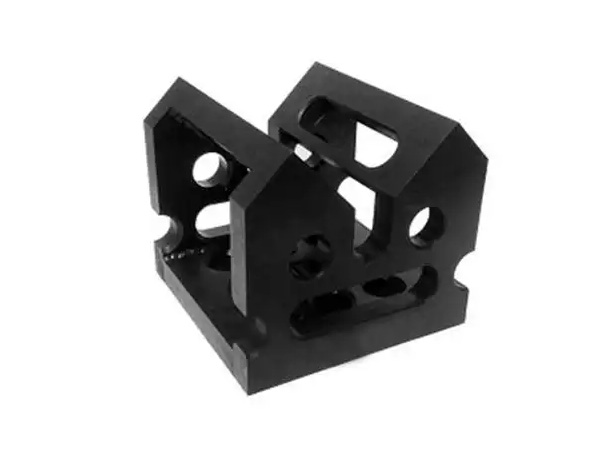
Vertical and angled framing: Tables are designed with integrated or add-on vertical frames and angle plates that carry the same grid standard as the base, allowing full three-dimensional constraint.
Single-setup complexity: The design goal is to present complex weld joints in the best welding position within one setup, reducing handling and repositioning.
Datum control in three axes: The engineering focus is on constraining the workpiece against datums in X, Y, and Z simultaneously, which is fundamentally different from a flat surface that constrains only the horizontal plane.
The buyer takeaway: for shops running 3D assemblies, a flat table with bolt-on frames added later is a weaker solution than a system designed for 3D fixturing from the start.
Trend 3: Automation and Robotic Welding Integration Built In
Automation is no longer an afterthought applied to a table chosen for manual welding. Fixture table design increasingly assumes the table will feed an automated or robotic cell:
Repeatable positioning for robot paths: The table is designed so the workpiece returns to the same position every cycle, which is what makes a taught robot path valid across runs.
Interface with positioners: Tables are designed to mount on or interface with rotary positioners and tilt-turntables, presenting the joint optimally to the welding head.
Actuated clamping: Pneumatic or hydraulic clamping integrated with cell control logic removes human variability from the clamping step, which is essential for consistent automated cycles.
The buyer takeaway: if automation is on the horizon, the fixture table should be specified for it now, because retrofitting automation onto a table not designed for it is costly and often compromises repeatability.
Trend 4: Digital Fixture Records and Offline Programming
The digital thread is reaching fixturing. Fixture table design is increasingly compatible with digital fixture records — the grid coordinates of a setup stored as a retrievable file:
Fixture programs: A setup documented by coordinates becomes a transferable asset rather than operator-specific knowledge, supporting consistency across shifts and sites.
Offline programming: Robotic welding programs can be written against the documented fixture geometry before the part is available for teaching, shortening cell commissioning.
Traceability: Linking fixture configuration records to production and inspection data supports quality systems that require documented process control.
The buyer takeaway: ask whether the fixture system can produce and export coordinate-based setup records. This capability is becoming a differentiator for shops building digital manufacturing workflows.
Trend 5: Materials and Surface Engineering Improve Durability
Design attention is moving toward the working surface's long-term behavior, because surface degradation is a major lifecycle cost:
Stress relief as standard: More specification attention is placed on stress relief or equivalent dimensional stabilization, because it determines whether the table holds flatness over years rather than months.
Surface hardening: Nitriding or induction hardening of the working layer improves wear resistance and reduces spatter adhesion, extending surface life under heavy use.
Material selection for stability: Cast iron and stabilized steel plates are selected specifically for dimensional stability and vibration damping, not just load capacity.
The buyer takeaway: surface treatment and stress relief should be specified and documented, because they determine the table's useful life far more than the initial appearance suggests.
Trend 6: Ergonomics, Safety, and Lifecycle Cost Focus
Design is increasingly judged by total cost of ownership rather than purchase price, and this reframes several features:
Ergonomics: Table height, load handling, and changeover ergonomics are designed to reduce operator fatigue and injury risk, which affects throughput and labor cost.
Safety integration: Features such as secure clamping, stable bases, and clear load ratings are designed in as safety elements, not additions.
Lifecycle costing: Design decisions are increasingly evaluated against setup time, rework, surface re-machining, and adaptability over the table's life — the real cost drivers.
The buyer takeaway: evaluate the table on lifecycle cost and operator impact, not on the headline price, because the design trends above all point toward long-term value over initial cost.
Trend 7: Sustainability and Standardization Pressure
A quieter but persistent direction is the pressure toward standardization and resource efficiency:
Standardization reduces waste: Common grid standards mean fewer custom fixtures are built and scrapped, reducing material and engineering waste per part family.
Durability over replacement: Designing for long service life and re-surfacing capability reduces the replacement frequency and the associated resource cost.
Reconfigurability as efficiency: A platform that adapts to new parts avoids the build-discard cycle of hard fixtures in changing production.
How to Evaluate These Trends for Your Own Procurement
The risk in tracking design trends is adopting features that do not match the production reality. A disciplined evaluation applies each trend against the actual operation:
Match to part mix: High-mix operations benefit most from modular and 3D fixturing; dedicated high-volume lines may still favor hard fixtures for the tightest tolerances.
Match to automation timeline: Specify automation compatibility before it is needed, but do not pay for capabilities with no near-term use case.
Match to quality system: If traceability is required, prioritize systems that produce digital fixture records; if not, that capability may be lower priority.
Match to lifecycle horizon: Evaluate surface treatment, stress relief, and re-surfacing capability against the expected service life and maintenance capacity.
The trends are real engineering directions, but the right answer for any given shop is the subset that solves its actual constraints — not the full list.
Conclusion
Welding fixture table design in this period is converging on a clear set of directions: modular reconfigurable grids, three-dimensional fixturing envelopes, built-in automation compatibility, digital fixture records, engineered surface durability, and a lifecycle-cost mindset. Each direction responds to a real pressure — part variety, automation, traceability, and cost discipline — and each is genuinely valuable where the production reality calls for it. The mistake to avoid is treating these as a checklist to maximize. The disciplined buyer weighs each trend against their part mix, automation timeline, quality requirements, and service horizon, and specifies the combination that solves their constraints. A fixture table selected this way is an investment that compounds in value; one selected by feature count is a cost that depreciates. To map these trends to a specific production environment, the engineering team can review the part envelope, changeover profile, and automation plans during a specification discussion.
Frequently Asked Questions
What is driving the shift toward modular welding fixture tables?
The primary driver is high-mix production, where building a custom hard fixture for every part family is slow and expensive. Modular grid systems let shops reconfigure fixturing by recombining standardized components, reducing lead time, engineering overhead, and hard-tooling inventory.
Why is 3D fixturing becoming more common in fixture table design?
Assemblies are increasingly welded in optimal positions rather than flat, and complex 3D parts need constraint in all axes. Extending the grid into vertical and angled planes lets a workpiece be held against datums in three dimensions and presented to the weld in one setup, reducing handling and repositioning.
How does fixture table design support robotic welding?
Robotic welding requires the workpiece to return to the same position every cycle so the taught path remains valid. Fixture tables designed for automation provide repeatable grid-referenced positioning, interfaces for positioners, and actuated clamping integrated with cell control logic, removing variability from the setup.
What are digital fixture records and why do they matter?
A digital fixture record stores the grid coordinates of a fixture setup as a retrievable file. It turns fixture knowledge into a transferable asset, supports offline robot programming against known geometry, and provides traceability by linking setups to production and inspection data — valuable where quality systems require documented process control.
Should I pay for all the latest fixture table features?
Not necessarily. Each design trend solves a specific constraint — part variety, automation, traceability, or lifecycle cost. The right approach is to match features to your actual part mix, automation timeline, quality requirements, and service horizon, and to specify the combination that addresses your constraints rather than maximizing feature count.
References
Groover, M. P. (2019). Fundamentals of Modern Manufacturing: Materials, Processes, and Systems (7th ed.). Wiley.
Kalpakjian, S., & Schmid, S. R. (2019). Manufacturing Engineering and Technology (8th ed.). Pearson.
American Welding Society. (2020). AWS D1.1/D1.1M: Structural Welding Code — Steel. American Welding Society.
ISO 3834-2:2021. Quality requirements for fusion welding of metallic materials — Part 2: Comprehensive quality requirements. International Organization for Standardization.
ASM International. (2011). ASM Handbook, Volume 6: Welding, Brazing, and Soldering. ASM International.
-
Welding Fixture Table Design Trends to Watch in 2026
-
Top Mistakes to Avoid When Choosing a Welding Table
-
Precision Welding Tables in Aerospace Manufacturing
-
Welding Bench vs Welding Table: Which One to Choose?
-
Steel Welding Table Fabrication Process Explained
-
Modular Fixture System in Automated Welding Lines
Hebei Yongxin Measuring Tools
Copyright © 2025-2026 http://www.yx-weldingtable.com. All Rights Reserved Hebei Yongxin Measuring ToolsCopyright