






- Navigation -
 Current Location:
NEWS DETAILS
NEWS INFORMATION
Heavy-Duty Welding Table: A Buying Guide for Engineers
AUTHOR:yongxin DATE:2026-09-07 21:48:41 HITS:85
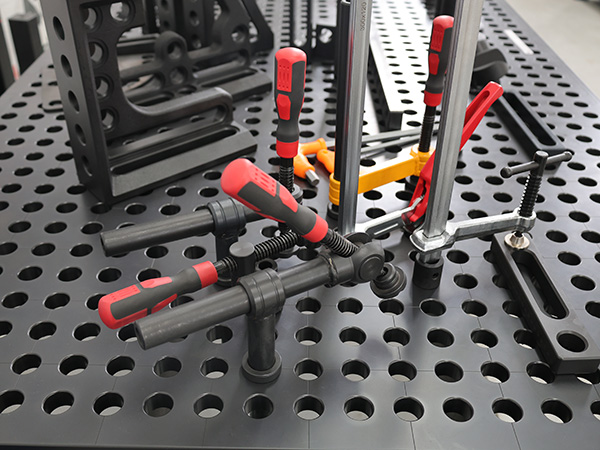
Welding thick plate, large structural sections, and heavy machinery components is a different discipline from light fabrication. The workpieces are heavier, the welding currents are higher, the thermal input is greater, and the forces applied during positioning and clamping are measured in tonnes rather than kilograms. A table built for light fabrication — however well made — will not survive this duty for long. It will deflect under load, its grid threads will deform, and its surface will lose flatness within months. The heavy-duty welding table exists for exactly this reason: it is engineered so that the table structure, surface, and grid system can absorb the loads and abuse of heavy fabrication while keeping the workpiece stable and the reference surface true. This guide explains, from an engineer's perspective, what to evaluate when buying one.
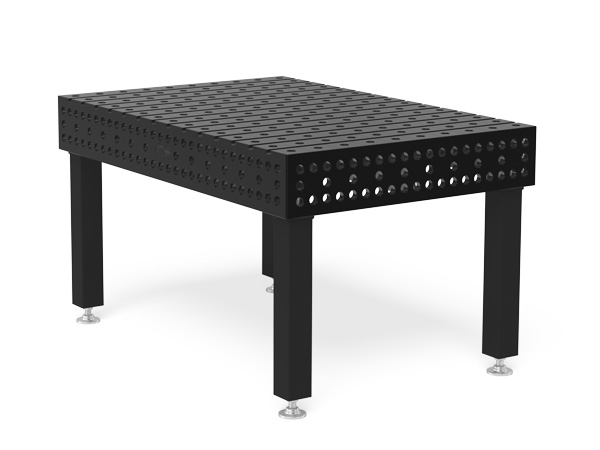
Understanding the Loads a Heavy-Duty Table Must Survive
The first step in specifying a heavy-duty welding table is understanding the load environment. It is rarely a single, simple number:
Static workpiece weight: The mass of the heaviest assembly that will rest on the table. For structural fabrication this commonly ranges from a few hundred kilograms to several tonnes.
Concentrated loading: A beam end, a base plate corner, or a jack stand leg concentrates the full weight onto a small area. The table surface and frame must handle this without local yielding or excessive deflection.
Dynamic loading: Workpieces positioned by crane or hoist land with impact. Repeated impacts fatigue the structure in ways that static calculations understate.
Clamping and reaction forces: Heavy clamps pulling against the grid apply significant local forces, especially when workpieces are forced into alignment — a common operation in fit-up of thick sections.
Thermal loading: High-current welding of thick plate deposits substantial heat into the table surface, which must be able to absorb local thermal distortion without permanent deformation.
Document these loads before talking to suppliers. A specification built on real numbers is far harder to argue with than a request for "something heavy-duty."
Structural Design: Where Heavy-Duty Actually Lives
The difference between a standard table and a heavy-duty welding table is primarily structural. The surface plate thickness, the frame design, and the way the two are connected determine whether the table holds its geometry under load:
Surface plate thickness: Heavy-duty tables typically use significantly thicker plate than standard tables. The thickness resists deflection between support points and provides thermal mass that absorbs welding heat without local distortion.
Ribbing and underside stiffening: A flat plate alone is not an efficient structure. Heavy-duty designs add ribs, webs, or box sections beneath the surface to increase stiffness without disproportionate weight. The quality of this stiffening determines deflection under concentrated loads.
Frame and leg design: The legs and connecting frame must carry the load to the floor without twisting. Heavy-duty tables use larger sections, welded or heavily bolted joints, and diagonal bracing that a light table simply does not have.
Surface-to-frame connection: How the surface plate is attached to the frame matters. A heavy plate bolted at too few points can rock or flex at the connection; the attachment pattern should distribute the load across the frame.
When comparing tables, ask directly about plate thickness, stiffening arrangement, and frame section sizes. These are the details that separate a genuine heavy-duty design from a standard design with marketing language.
Reading Load Ratings Correctly
Load ratings are the most quoted and least understood number in table specifications. An engineer evaluating a heavy-duty welding table should ask three questions about any stated rating:
What load configuration does the rating assume? A uniformly distributed load over the full surface is far easier to support than a concentrated load at mid-span. Ratings should state the load configuration, and the buyer should evaluate the worst-case configuration for their own parts.
What deflection corresponds to the rating? A rating that allows significant deflection under load may be safe but useless for accurate work. The relevant question is: at what load does the surface deflect beyond the acceptable limit for the intended work?
What safety margin is built in? The rating should be below the structure's failure or permanent-deformation threshold by a defined margin. Ask what margin the manufacturer applies.
For heavy fabrication, the practical approach is to define an acceptable deflection limit for the plant's tolerance requirements, then verify each candidate table against that limit at the plant's real loading configuration.
Grid Systems and Clamping Under Heavy Loads
The grid system on a heavy-duty table must do everything a standard grid does — locate clamps, stops, and fixtures — but under far higher forces. Several properties deserve attention:
Thread size and engagement: Heavy-duty grids commonly use larger thread sizes than standard tables to distribute clamping forces over more thread engagement. The thread size should be matched to the clamping forces the plant will apply.
Hole spacing and pattern: Some heavy-duty tables retain the standard 100 mm pattern with a larger thread; others use a coarser pattern with heavier holes. The choice affects both strength and the available accessory ecosystem.
Hole edge treatment: The hole edges on a heavy-duty table should be chamfered or otherwise finished to resist deformation when clamps are loaded at an angle — a common condition when pulling heavy sections into alignment.
Accessory compatibility with the duty class: Clamps and stops used on a heavy-duty table must themselves be rated for the forces involved. A light clamp on a heavy table is a failure waiting to happen, regardless of the table's strength.
The grid is the interface between the table's strength and the plant's fixturing. It should be specified with the same care as the structural members.
Material Selection for Heavy-Duty Service
The materials used in a heavy-duty welding table determine how it behaves over years of severe service. Key material considerations include:
Surface plate steel: The plate should have consistent, weldable properties and sufficient toughness for the service. Structural-grade steel with controlled composition is the norm; the exact grade should be disclosed by the supplier.
Stress relief: A heavy plate that is machined without stress relief can distort over time as residual stresses redistribute. Stress relief after rough machining and before finishing is the mark of a properly engineered heavy table.
Surface hardening options: Heavy fabrication generates aggressive spatter and abrasion. Hardened or nitrided surfaces resist this wear substantially, and the extended service interval can justify the cost in continuous heavy production.
Corrosion protection: Heavy-duty tables are often used in demanding environments. Frame members should be protected against corrosion where practical, and the design should avoid moisture traps at joints.
Material choices interact with structural design: a thicker plate of a lower grade may be a better engineering solution than a thinner plate of a higher grade, depending on the failure mode the design must resist.
Anchoring, Positioning, and Workshop Integration
A heavy table cannot be treated like a movable workbench. Its installation is part of the engineering decision:
Floor anchoring: A table that can move or rock under load is dangerous and inaccurate. Heavy-duty tables should be anchored to a floor slab capable of carrying the combined table and workpiece weight. Verify the slab's capacity before installation.
Leveling provisions: Heavy tables need robust leveling systems that can be adjusted under load. The leveling arrangement should allow periodic re-leveling without lifting the table.
Crane and hoist access: If workpieces are loaded by overhead crane, the table position and the plant's crane coverage must be planned together. The table should not be placed where crane access creates positioning compromises.
Layout for multiple stations: Heavy fabrication often uses multiple tables in a cell — one for fit-up, one for welding, one for inspection. The layout should support the workflow with adequate access for operators and material handling equipment.
Integration planning converts a table purchase into a working station. Skipping it means the table arrives before the plant is ready for it.
Lifecycle Cost: Buying for the Long Term
A heavy-duty welding table is a long-life asset, and the purchase decision should reflect that. The lifecycle view includes:
Initial cost versus structural quality: In heavy-duty tables, the price difference between a robust design and a marginal one is small relative to the cost of premature failure, downtime, and rework. This is not the place to save the last few percent.
Maintenance requirements: Surface treatment, grid protection, and structural inspection intervals affect ongoing cost. Tables designed for maintainability — accessible fasteners, replaceable wear parts — cost less over their lives.
Repair and re-surfacing economics: Heavy tables can often be re-surfaced rather than replaced when wear eventually exceeds tolerance, provided the frame is sound. The design should make this possible — a consideration worth raising with the supplier.
Residual value: Well-built heavy-duty tables retain value over long service lives. A documented service history supports that value, whether the table is retained, upgraded, or eventually sold.
The lifecycle view is what separates an engineering purchase from a commodity purchase. The table that costs least over twenty years is rarely the one with the lowest invoice.
Conclusion
A heavy-duty welding table is an engineered structure, not an oversized workbench. It earns its classification through plate thickness and stiffening, honest load ratings, a grid system matched to real clamping forces, appropriate materials and stress relief, and proper anchoring in the workshop. For engineers specifying workholding equipment for heavy fabrication, the buying process should follow the same logic as any structural design: define the loads, verify the structure against them, and evaluate the asset over its full service life. A table that is correctly specified for heavy duty will hold its geometry, protect the quality of the work on top of it, and remain a productive asset for decades — which is exactly what heavy fabrication demands of its equipment.
Frequently Asked Questions
What load capacity does a heavy-duty welding table need?
The required capacity depends on the heaviest workpiece and how its weight is distributed. Because real loading is concentrated and dynamic, the table's rated capacity should exceed the heaviest regular workpiece by a substantial margin — commonly 1.5 to 2 times — and the buyer should verify deflection at the plant's actual loading configuration, not just the headline rating.
How does a heavy-duty welding table differ from a standard one?
The differences are structural: a thicker surface plate, ribbed or box-section stiffening, heavier frame sections, bracing, larger grid threads, and anchoring provisions. A heavy-duty table is engineered to hold its geometry under concentrated loads and thermal input that would deflect or damage a standard table over time.
Should a heavy-duty welding table be anchored to the floor?
Yes, in most heavy fabrication applications. A table that can move or rock under load is both dangerous and inaccurate. Floor anchoring requires a slab with adequate capacity for the combined table and workpiece weight, which should be verified before installation.
Is a hardened surface worth it on a heavy-duty welding table?
For continuous heavy production, hardened or nitrided surfaces resist spatter adhesion and abrasion substantially, extending the interval before re-surfacing becomes necessary. The decision is a lifecycle cost calculation: the treatment premium versus reduced maintenance and longer service life at the plant's production intensity.
Can a heavy-duty welding table be re-surfaced when it wears?
Yes, in most cases, provided the frame and structure remain sound. The surface plate can be machined flat again at a cost typically well below a new table. The design should make re-surfacing practical — a point worth confirming with the supplier before purchase.
References
Groover, M. P. (2019). Fundamentals of Modern Manufacturing: Materials, Processes, and Systems (7th ed.). Wiley.
American Welding Society. (2020). AWS D1.1/D1.1M: Structural Welding Code — Steel. American Welding Society.
ASM International. (2011). ASM Handbook, Volume 6: Welding, Brazing, and Soldering. ASM International.
American Society of Mechanical Engineers. (2021). ASME BPVC Section IX — Qualification Standard for Welding, Brazing, and Fusing Procedures. ASME.
ISO 15614-1:2017. (2017). Specification and qualification of welding procedures for metallic materials — Welding procedure test — Part 1: Arc and gas welding of steels. International Organization for Standardization.
-
Heavy-Duty Welding Table: A Buying Guide for Engineers
-
Steel Nitriding Welding Table: Proven Method to Extend Service Life
-
Modular Welding Table: Complete Cost vs Performance Analysis
-
Best Welding Table for Fabrication Workshops: 2026 Buyer's Guide
-
Welding Table Surface Treatments: Nitriding vs Coating
-
Precision Welding Tables: The Ultimate Guide for Jig-Free Welding Operations
Hebei Yongxin Measuring Tools
Copyright © 2025-2026 http://www.yx-weldingtable.com. All Rights Reserved Hebei Yongxin Measuring ToolsCopyright