






- Navigation -
 Current Location:
NEWS DETAILS
NEWS INFORMATION
Welding Table Surface Treatments: Nitriding vs Coating
AUTHOR:yongxin DATE:2026-08-26 18:43:20 HITS:194
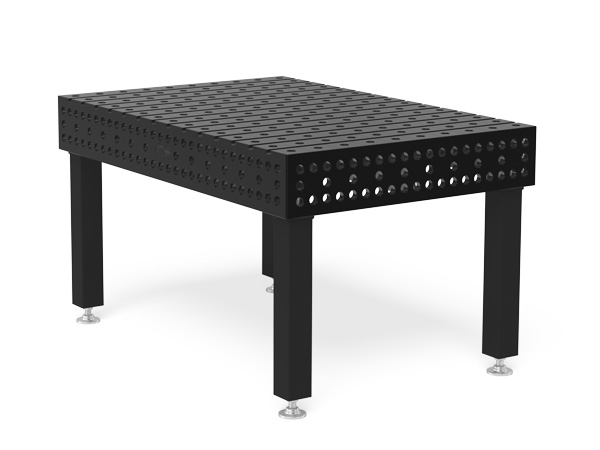
The working surface of a welding table endures punishment that would defeat most metal treatments. Repetitive thermal cycling from high-amperage arcs, impact from dropped workpieces, abrasion from plate dragging, and the relentless accumulation of weld spatter all test the limits of surface engineering. Choosing the right surface treatment for a welding table affects maintenance intervals, service life, and ultimately the cost of every weldment that passes through the station. Two approaches dominate the selection conversation: steel nitriding and applied surface coatings. This comparison examines both in the context of real fabrication shop conditions.
How Steel Nitriding Works as a Surface Treatment
Gas nitriding is a thermochemical diffusion process conducted in a sealed furnace atmosphere typically maintained at 500 to 575 degrees Celsius. Ammonia gas decomposes at the steel surface, releasing nitrogen atoms that diffuse into the crystal lattice of the base metal. The treatment creates two distinct zones: a thin compound zone of iron nitrides at the immediate surface and a deeper diffusion zone where nitrogen is distributed in solid solution within the matrix.
The compound zone achieves surface hardness values of 900 HV to 1100 HV — roughly equivalent to 65 to 72 HRC — which is two to three times harder than untreated carbon steel. Because the hardened layer is an integral part of the base material rather than a separate coating, there is no risk of delamination or peeling during service. The nitrogen diffusion also improves fatigue strength by introducing compressive residual stresses in the surface layer, which is particularly beneficial under the cyclic thermal loading that welding tables experience.
Steel nitriding works most effectively on alloy steels containing chromium, molybdenum, or vanadium — elements that form stable nitrides that contribute to surface hardness. Common nitriding-grade steels include 4140, 4340, and various proprietary low-alloy grades formulated specifically for the treatment. Carbon steel can be nitrided, but the resulting hardness values are lower and the case depth is shallower, making it less suitable for heavy fabrication applications.
Applied Surface Coatings for Welding Table Protection
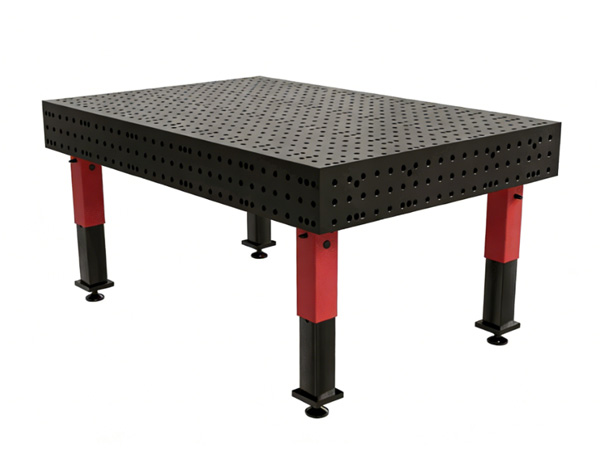
Applied coatings — including hard chrome plating, thermal spray coatings, and boronizing treatments — deposit a separate layer of wear-resistant material onto the surface of the base steel. Unlike nitriding, which modifies the substrate, coating creates a distinct layer that is bonded to the surface through various metallurgical or mechanical mechanisms.
Hard chrome plating has historically been the most common applied coating for welding table surfaces. Electroplated chromium achieves surface hardness of 800 HV to 1000 HV and provides excellent corrosion resistance. However, chrome plating faces increasing regulatory scrutiny due to hexavalent chromium waste handling requirements, and the plating process cannot be performed in-house by most fabrication shops — the table must be shipped to a specialist plater.
Thermal spray processes — including high-velocity oxygen fuel (HVOF) and plasma spraying — deposit carbide, oxide, or alloy coatings with hardness values reaching 1200 HV to 1400 HV. These coatings bond metallurgically to properly prepared substrates and provide excellent wear resistance. The main drawbacks are cost — thermal spray application is significantly more expensive than nitriding — and the risk of edge cracking when the coating is applied to thin sections or complex geometries.
Boronizing is a diffusion treatment that introduces boron into the steel surface at temperatures of 800 to 1000 degrees Celsius, creating a boride layer with exceptional hardness — 1600 HV to 2000 HV in some configurations. The treatment is effective but requires high temperatures that can distort precision-machined surfaces, making it less suitable for tables that must maintain tight flatness tolerances.
Performance Comparison in Fabrication Shop Conditions
In day-to-day fabrication shop conditions, both nitriding and coating approaches provide meaningful improvements over untreated steel surfaces, but their performance characteristics differ in ways that affect the practical user experience.
Wear resistance under heavy clamping and plate dragging is excellent for both nitrided and hard-coated surfaces. The nitrided case maintains its hardness because it is integral to the substrate — as the surface wears, fresh hardened material is continuously exposed. Applied coatings, by contrast, wear away over time, and once the coating is depleted, the underlying steel degrades rapidly because of the hardness differential between the coating and the substrate.
Spatter release is noticeably better on nitrided surfaces than on chrome-plated tables. The lower surface energy of the nitrided compound zone allows weld spatter to release more cleanly during cooling, reducing cleanup time. This practical benefit translates directly into productive labor hours saved over the service life of the table.
Thermal stability favors nitriding decisively. Chrome plating and some thermal spray coatings can develop microcracks under the sustained heat input of heavy welding. Once cracks initiate, they propagate under continued thermal cycling and can lead to coating spalling. The nitrided layer, being integral to the substrate, tolerates thermal cycling without the same failure mode.
Corrosion Resistance in Shop and Outdoor Environments
Fabrication shops are not always climate-controlled environments. Many job shops operate with open bay doors, and some outdoor storage of materials is common. Under these conditions, corrosion resistance becomes an important selection criterion.
The nitrogen-rich compound zone on a nitrided surface provides meaningful corrosion resistance in atmospheric exposure conditions. In controlled shop environments, a nitrided table will maintain its surface appearance indefinitely with basic cleaning. In intermittently wet conditions, occasional light rust may appear in areas of heavy wear but does not propagate rapidly into the hardened case. Overall corrosion resistance is markedly superior to untreated carbon steel and comparable to medium-quality chrome plating.
Hard chrome plating provides excellent corrosion resistance under ideal conditions, but the coating is susceptible to undercutting corrosion if the base steel becomes exposed through wear or mechanical damage. Repairing chrome damage requires re-plating, which involves shipping the table to a specialist facility. Nitrided surfaces, by contrast, can be retreated in a nitriding furnace without removal of the existing case — a simpler and more cost-effective process.
Cost Analysis and Economic Considerations
Initial cost for a nitrided welding table typically runs 20 % to 35 % higher than an equivalent untreated table from the same manufacturer. The nitriding process adds cost, but this is partially offset by the elimination of finishing operations that would otherwise be required to maintain the surface. For a 1500 x 900 mm table, expect to pay approximately 1500 USD to 2500 USD more for the nitriding treatment.
Applied coatings vary widely in cost. Chrome plating is comparable to nitriding in price for standard table sizes. Advanced thermal spray coatings can cost 50 % to 100 % more than nitriding, particularly for the higher-performance HVOF processes. When evaluating coating costs, always request the total installed cost including surface preparation, any required heat treatment of the substrate, and freight to and from the application facility.
Over a fifteen-year service life, a nitrided table typically requires one or two retreatments at a fraction of the original treatment cost. Tables with applied coatings may require recoating every three to five years in heavy-use environments, with each recoating cycle involving removal, transport, surface stripping, and reapplication. The maintenance cost curve for nitriding is generally more favorable over the long term.
Frequently Asked Questions
Q1: Can I retrofit an existing welding table with a nitriding or coating treatment?
Both treatments can be applied to existing tables, provided the base steel is compatible with the process. Nitriding works best on alloy steels (4140, 4340, and similar grades). Chrome and thermal spray coatings can be applied to most carbon and alloy steels after suitable surface preparation. Evaluate whether retrofit costs approach the price of new equipment — in many cases replacement is more economical.
Q2: Which surface treatment provides the best spatter release on a welding table?
Steel nitriding consistently delivers superior spatter release compared to chrome plating and most thermal spray coatings. The nitrogen-rich compound zone has lower surface energy, allowing weld spatter to release more cleanly during cooling. Fabricators typically report 40 % to 60 % less cleanup time on nitrided tables compared to untreated surfaces.
Q3: How do nitriding and chrome plating compare under high-amperage welding conditions?
Nitriding performs better under sustained high-amperage welding. Chrome plating and some thermal spray coatings can develop microcracks from thermal cycling, which may eventually lead to spalling. The nitrided case is integral to the substrate and tolerates repeated thermal cycling without the same failure mechanisms. For FCAW at 350 A to 400 A, nitriding is the preferred treatment.
Q4: What maintenance does a nitrided welding table require compared to an untreated table?
Daily spatter removal using non-metallic tools. Weekly inspection of surface condition and grid hole cleanliness. Monthly flatness verification. Periodic retreatments — typically every five to eight years in heavy-use conditions — restore surface hardness and corrosion resistance without removing the table from service.
Q5: Which treatment offers better long-term cost of ownership for a fabrication shop?
Over fifteen years, nitriding typically provides a more favorable cost of ownership. Initial cost premium is moderate, retreatments are relatively inexpensive, and the integral nature of the hardened layer means there is no risk of costly coating delamination failures. Applied coatings may require complete recoating cycles every few years, with each cycle involving removal and transport costs.
Conclusion
Both nitriding and applied coatings improve on untreated steel surfaces for welding table applications, but the mechanisms, performance characteristics, and long-term economics differ meaningfully. Steel nitriding provides an integral, thermally stable hardened surface with excellent wear resistance, good corrosion performance, and superior spatter release — all at a moderate initial cost premium and favorable long-term maintenance profile. Applied coatings offer higher theoretical hardness values but carry risks of delamination, higher initial costs for premium processes, and more complex maintenance requirements. For most fabrication shops, the practical advantages of nitriding — particularly its thermal stability and retreatment capability — make it the more compelling choice for heavy-duty welding table surface treatment.
References
Parrish, G. (2022). The Heat Treatment of Steel: Nitriding and Nitrocarburizing (4th ed.). ASM International.
ASM Handbook Committee. (2021). ASM Handbook Volume 4: Heat Treating (2nd ed.). ASM International.
Krauss, G. (2021). Steels: Processing, Structure, and Performance (2nd ed.). ASM International.
Thompson, R., Chen, W., & Williams, S. (2023). Comparative evaluation of surface engineering methods for industrial workholding. Journal of Materials Engineering and Performance, 32(8), 3456-3470.
-
Welding Table Surface Treatments: Nitriding vs Coating
-
Precision Welding Tables: The Ultimate Guide for Jig-Free Welding Operations
-
Welding Fixture Table Safety Standards: A Complete Regulatory Overview
-
Modular Welding Table Layout Strategies for High-Mix Production Facilities
-
Industrial Welding Table Applications in Mass Production Environments
-
Best Accessories to Upgrade Your Welding Table Performance
Hebei Yongxin Measuring Tools
Copyright © 2025-2026 http://www.yx-weldingtable.com. All Rights Reserved Hebei Yongxin Measuring ToolsCopyright