






- Navigation -
 Current Location:
NEWS DETAILS
NEWS INFORMATION
Best Accessories to Upgrade Your Welding Table Performance
AUTHOR:yongxin DATE:2026-08-06 13:57:15 HITS:121
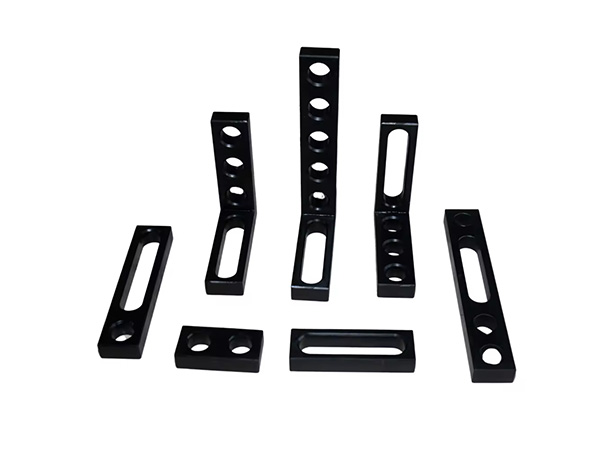
A precision welding table is only as capable as the system of components that surround it. Even the finest flat-machined surface loses much of its utility if the clamping strategy is improvised, the reference stops are inaccurate, or the table cannot accommodate workpieces of varying sizes. This is where a well-designed ecosystem of welding table accessories becomes critical. By investing in purpose-built clamping components, positioning stops, risers, and material-handling supports, fabricators can transform a basic flat surface into a versatile production platform capable of handling an extraordinary range of part geometries. This guide walks through the most impactful accessories available, their specific functions, and how to build a modular accessory set that grows with your workshop's needs.
Why Accessories Matter: Extending the Value of Your Welding Table
Many first-time buyers of precision welding tables treat the table surface as the product. In practice, the table is better understood as a platform—and the accessories are the tools that unlock its full potential. A standard 1,200 mm × 2,400 mm precision table paired with a comprehensive modular accessory kit can effectively replace dozens of custom jigs, each of which would have cost hundreds or thousands of dollars to fabricate and maintain.
The real advantage of a modular accessory system lies in reconfigurability. As production requirements change—as new part families are introduced or existing designs are modified—the same accessories can be repositioned to accommodate the new geometry. There is no need to build a new jig, wait for its fabrication, or allocate storage space for a fixture that may be used only twice a year. A supplier that offers a broad range of accessories effectively gives the manufacturer unlimited fixture flexibility from a single table investment.
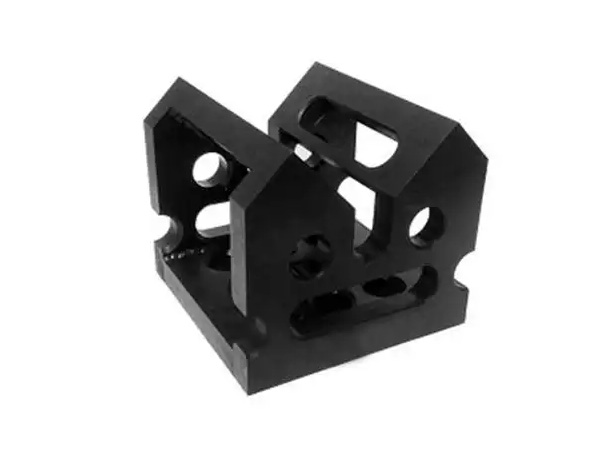
Modular Clamping Systems: The Foundation of Flexible Fixturing
Clamping is the most fundamental function of any welding table accessory system. The goal is to apply sufficient holding force to resist the lateral and rotational forces generated during welding without distorting the workpiece or damaging its surface. Modular clamping systems designed for precision tables typically fall into several categories:
Step clamps: The most versatile clamp type for welding tables. Step clamps use a bar with stepped serrations that engage with the table grid, allowing the clamping arm to be positioned at multiple heights to accommodate workpieces of varying thickness. They provide strong downward clamping force and are quick to deploy.
Flat clamps: Low-profile clamps designed for applications where a standard step clamp would interfere with the welding torch or electrode. Flat clamps are ideal for thin sheet metal work where minimal clamp height is essential.
Toggle clamps: Rapid-action clamps that lock into position with a single lever movement. They are particularly valuable in production environments where cycle time is critical, as they can be opened and closed in seconds without threading any mechanism.
Edge clamps: Specialized clamps that grip the edge or flange of a workpiece rather than the face. They are essential for positioning structural steel sections, tubing, and other profiles where face access is limited.
Toe clamps: Compact clamps that grip from the side using a threaded foot mechanism. They are commonly used to secure workpieces against the table surface or against other fixtures without obstructing the work area.
Precision Stops, Blocks, and Positioning Guides
Accurate positioning is as important as secure clamping. A welding table accessory set is incomplete without a range of stops and blocks that provide repeatable reference points:
Stop bars and angle stops: Precision-machined bars that insert into the table grid to provide hard stops for workpiece edges. When set once for a given part, they ensure that every subsequent workpiece in the production run is loaded to the same reference position.
Locating pins and cones: Spring-loaded or press-fit pins that engage with predrilled holes in the workpiece to provide precise positional referencing. They are widely used in repeat-batch production where the workpiece has existing hole patterns.
Angle plates and brackets: Machined blocks that set and hold specific angles—typically 30°, 45°, 60°, 90°—for miter joints, chamfered edges, and structural connections.
Reference squares: Large machined squares used to set perpendicular reference planes on the table surface, ensuring that assemblies are square before welding begins.
V-blocks: V-shaped supports designed to hold cylindrical or round workpieces, such as pipe, tubing, and shaft sections, in a stable, centered position.
Risers, Supports, and Height Adjustment Systems
Not all welding occurs on the table surface. Workpieces that are tall, irregularly shaped, or too large to be positioned flat require welding table accessories that extend the working envelope vertically or provide intermediate support:
Riser blocks: Precision-machined blocks of various heights (25 mm, 50 mm, 100 mm, etc.) that raise the workpiece off the main table surface. This allows welding on the underside of the part without the operator having to work underneath the workpiece.
Roller stands and support arms: Adjustable-height stands that support long workpieces—structural beams, long tubes, large panels—along their length, preventing sagging and reducing the risk of distortion from cantilever loading.
Height-adjustable legs: Some precision table systems offer pneumatic or mechanical height adjustment, allowing the working surface to be raised or lowered to an ergonomically optimal position for the specific task and operator.
Outriggers: Extension arms that attach to the table grid to support overhangs or cantilevered sections of large workpieces, distributing the load across a wider base.
Material Handling and Workflow Accessories
Efficiency in a welding cell is not limited to the welding process itself. How materials arrive at and depart from the table significantly affects overall throughput. Practical material handling accessories include:
Rolling carts and dollies: Heavy-duty carts designed to move large workpieces into and out of the welding cell. Matching the cart height to the table height creates a smooth material transfer without lifting.
Overhead hoists and jib cranes: For workpieces exceeding 100 kg, an overhead lift system integrated with the welding cell eliminates manual handling risks and allows precise positioning on the table surface.
Tool holders and magnetic tool bars: Mounted directly on the table frame or nearby, these keep clamps, stops, and hand tools organized and within reach, reducing the time operators spend searching for components between setups.
Welding cable management arms: Articulated arms that route the welding cable from the power source to the torch, keeping the cable off the table surface and preventing it from snagging on clamps or workpieces during welding.
Selecting the Right Accessories for Your Production Needs
With such a wide range of welding table accessories available, the challenge for buyers is selecting the right combination for their specific production context. Here are practical selection guidelines:
Start with the clamp set: A complete set of step clamps and flat clamps in multiple sizes covers the majority of clamping needs. Add toggle clamps if production cycle time is a priority.
Add stops progressively: A basic set of stop bars in two lengths and a few angle plates handles most positioning requirements. Add V-blocks and locating pins as specific production needs arise.
Match load ratings: Ensure all accessories are rated for the maximum load you expect to place on the table. Under-rated components fail prematurely and create safety risks.
Verify compatibility: Accessories must be designed for the specific grid pattern and hole size of your table. Mixing incompatible systems wastes money and creates frustration.
Plan for expansion: Purchase from a supplier that offers ongoing accessory availability. The system should grow with your business rather than becoming obsolete after the initial purchase.
Conclusion
The right set of welding table accessories transforms a precision table from a flat work surface into a complete fixturing system capable of supporting diverse production requirements. By investing strategically in modular clamps, precision stops, positioning aids, and material handling supports, manufacturers can dramatically reduce setup times, improve part consistency, and eliminate the cost of custom jigs. For any fabrication supplier or in-house welding operation looking to maximize the return on their precision table investment, building a comprehensive accessory kit is not optional—it is essential. The flexibility, speed, and repeatability that a well-equipped modular table provides directly translate to lower per-part cost and faster delivery schedules in competitive manufacturing environments.
Frequently Asked Questions
A: A comprehensive set of step clamps is the most fundamental investment. Step clamps provide the primary holding force for virtually any workpiece and are the most frequently used accessory in day-to-day welding operations. A quality set of step clamps in multiple sizes will serve the widest range of applications immediately.
A: Generally no. Most precision welding table manufacturers use proprietary grid hole patterns and thread specifications. Accessories are designed to match a specific manufacturer's table system. Before purchasing accessories, verify the thread size, grid spacing, and hole diameter of your table and confirm compatibility with the accessory supplier.
A: Keep all threaded components (clamp shafts, adjustment screws) clean and lightly lubricated. Inspect clamping faces for wear or deformation monthly. Store accessories in a labeled organizer to prevent damage and loss. Replace any component that shows signs of cracking, excessive wear, or thread damage immediately to avoid safety incidents.
A: Yes. The modular fixturing system on a precision table is equally applicable to assembly, inspection, drilling, and light machining operations. Many manufacturers use the same table for multiple processes, which improves return on the equipment investment and ensures consistent part reference across all operations.
A: All accessories should be rated at least 25% above the maximum load you plan to apply. Step clamps typically range from 500 kg to 2,000 kg clamping force depending on size and design. Verify each accessory category individually—clamps, stops, and risers may have different load ratings within the same product line.
References
ASM International. (2022). Welding Handbook: Fundamentals of Welding (9th ed.). ASM International.
American Welding Society. (2021). AWS D1.1/D1.1M: Structural Welding Code – Steel. American Welding Society.
Kalpakjian, S., & Schmidt, S. R. (2021). Manufacturing Engineering and Technology (7th ed.). Pearson.
American Society of Mechanical Engineers. (2022). ASME BPVC Section IX – Qualification Standard for Welding, Brazing, and Fusing Procedures. ASME.
-
Best Accessories to Upgrade Your Welding Table Performance
-
Heavy-Duty Welding Table for Shipbuilding Industry Guide
-
Efficient Welding Table Layout Design Guide for Industrial Shops
-
Steel Nitriding Welding Table: Benefits and Applications
-
Modular Fixture System for Automotive Welding Production
-
3D Flexible Welding Platform Improves Welding Accuracy and Precision
Hebei Yongxin Measuring Tools
Copyright © 2025-2026 http://www.yx-weldingtable.com. All Rights Reserved Hebei Yongxin Measuring ToolsCopyright