






- Navigation -
 Current Location:
NEWS DETAILS
NEWS INFORMATION
Modular Fixture System for Automotive Welding Production
AUTHOR:yongxin DATE:2026-07-08 15:34:51 HITS:169
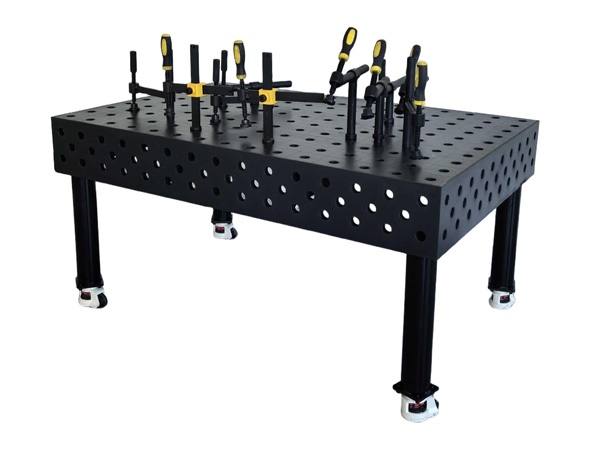
Automotive manufacturing demands exceptional flexibility, precision, and efficiency in welding operations. As vehicle platforms proliferate and product lifecycles shorten, traditional dedicated welding fixtures become economic liabilities. A modular fixture system provides the adaptability automotive manufacturers need to respond to market demands while maintaining quality and controlling costs. This comprehensive guide examines how modular fixture systems transform automotive welding production through enhanced flexibility, reduced changeover time, and optimized capital utilization.
Automotive Industry Context: Modern automotive manufacturing typically involves 5-15 vehicle variants per production line, with model year changes requiring fixture modifications every 12-36 months. Traditional dedicated tooling approaches struggle to accommodate this variability cost-effectively. Modular fixture systems enable automotive manufacturers to reconfigure welding cells in hours rather than weeks, supporting agile manufacturing strategies essential for competitive viability.
The Automotive Welding Challenge: Variability and Volume
Automotive welding operations face unique challenges that distinguish them from general fabrication:
High-Mix Production Requirements: Contemporary automotive plants produce multiple vehicle variants on shared lines. A typical body shop handles 3-8 different models with numerous sub-variants (trim levels, powertrain options, regional specifications). Each variant requires specific fixture configurations, creating substantial tooling complexity.
Stringent Quality and Repeatability Standards: Automotive welding quality directly impacts vehicle safety, durability, and customer satisfaction. Fixture systems must maintain positioning accuracy within ±0.5mm (often tighter for critical safety structures) across hundreds of thousands of cycles. Modular fixture systems achieve this repeatability through precision-engineered connection interfaces and standardized reference datums.
Aggresive Changeover Requirements: Model year transitions, mid-cycle refreshes, and production mix adjustments require rapid fixture reconfiguration. Traditional approaches requiring 2-8 weeks for fixture changeover are increasingly untenable. Modular fixture systems enable changeovers in 2-48 hours, depending on complexity, dramatically reducing downtime and inventory carrying costs.
Capital Efficiency Pressures: Automotive manufacturing requires enormous capital investment. Dedicated fixtures for each vehicle variant represent substantial sunk cost with limited reusability. Modular fixture systems amortize investment across multiple vehicle programs, improving capital efficiency and reducing per-vehicle tooling costs.
Modular Fixture System Architecture for Automotive Applications
Automotive-grade modular fixture systems incorporate several critical design elements:
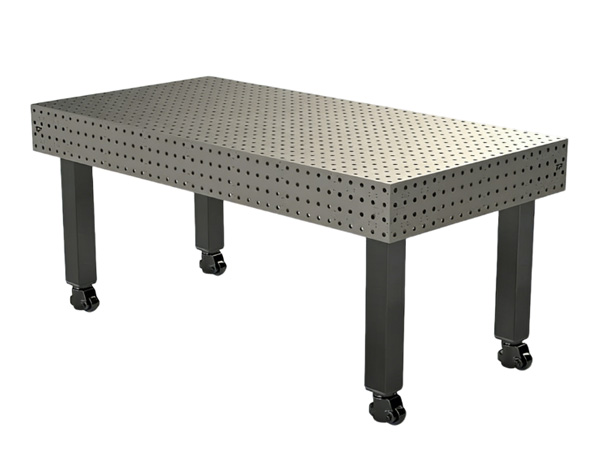
1. Standardized Interface Grid System
Automotive modular fixture systems utilize precision-machined grid patterns (typically 50mm or 100mm spacing) with location tolerances of ±0.05mm. This standardization ensures that fixture elements from different vehicle programs interface consistently, enabling mixed-model production and rapid changeover.
2. Quick-Change Connection Mechanisms
Pneumatic or hydraulic quick-release mechanisms enable fixture element changes in seconds rather than minutes. For high-volume production, automated connection systems integrate with plant control systems, enabling recipe-driven fixture configuration changes with minimal operator intervention.
3. Integrated Measurement and Verification
Automotive quality systems demand continuous verification. Advanced modular fixture systems incorporate embedded sensors that monitor fixture position, clamping force, and part presence. This integration supports Industry 4.0 initiatives and provides data for predictive maintenance programs.
4. Robot-Compatible Design
Automotive welding is heavily automated. Modular fixture systems accommodate robotic torch access paths, sensor mounting, and automated part loading/unloading. Fixture designs consider robot reach envelopes, singulation requirements, and collision avoidance geometries.
Application Case Study: Body-in-White Production
Body-in-White (BiW) assembly represents the most demanding application for modular fixture systems in automotive manufacturing. A typical BiW line involves 150-300 welding robots and 50-100 fixture stations.
Implementation Results: Leading Automotive OEM (2023-2024)
Fixture Changeover Time: Reduced from 3.5 weeks (dedicated) to 18 hours (modular) - 90% improvement
Capital Tooling Cost: Reduced by 45% across 5 vehicle programs through fixture reuse
Floor Space Utilization: Improved by 30% through shared fixture storage and rapid changeover
Quality Consistency: Maintained ±0.3mm positioning accuracy across 500,000+ weld cycles
ROI Timeline: 22 months for complete system implementation across 3 BiW lines
This case study demonstrates that modular fixture systems deliver transformative benefits for automotive welding production when properly implemented at scale. The 90% changeover time reduction alone justifies investment for manufacturers with frequent model changeovers or mixed-model production requirements.
Implementation Roadmap for Automotive Manufacturing
Successful modular fixture system implementation in automotive environments follows structured methodology:
Phase 1: Assessment and Planning (3-6 months)
Audit existing fixture inventory, document changeover procedures, analyze production mix and variability, and develop implementation prioritization based on highest-impact opportunities. Engage cross-functional teams (engineering, production, maintenance, quality) to ensure comprehensive requirements capture.
Phase 2: Pilot Implementation (6-12 months)
Select 1-2 representative welding cells for initial modular implementation. This pilot phase validates technical performance, refines operational procedures, and builds organizational confidence. Measure all relevant KPIs (changeover time, quality metrics, downtime) to document benefits.
Phase 3: Scaled Deployment (12-36 months)
Roll out modular fixture systems across additional welding cells based on pilot learnings. Prioritize high-mix cells and frequently changed-over lines. Invest in training programs to build internal competency in modular system design, operation, and maintenance.
Phase 4: Optimization and Continuous Improvement (Ongoing)
Establish continuous improvement processes that capture operator feedback, analyze performance data, and identify further optimization opportunities. Develop internal modular fixture design capabilities to reduce external engineering costs over time.
Integration with Automotive Manufacturing Systems
Modular fixture systems must integrate seamlessly with broader automotive manufacturing ecosystem:
Manufacturing Execution Systems (MES): Fixture configuration should integrate with MES to ensure correct setup for each vehicle variant. Barcode/RFID identification of fixture elements enables automatic verification of proper configuration before production commencement.
Quality Management Systems (QMS): Automotive QMS (IATF 16949) requires documented control of manufacturing processes. Modular fixture systems must provide calibration records, maintenance logs, and configuration documentation accessible for audits and customer reviews.
Robotic Welding Integration: Fixture positioning must be synchronized with robot programs. Modern implementations use digital twin technology to simulate fixture-robot interactions before physical implementation, reducing commissioning time and collision risks.
Andon and Visual Management: Integrate fixture status into plant visual management systems. Operators should instantly see fixture configuration status, maintenance requirements, and changeover progress through Andon displays and mobile interfaces.
Automotive Implementation Tip: When transitioning to modular fixture systems, maintain parallel dedicated fixtures for 2-3 months during initial production validation. This redundancy ensures production continuity if modular system issues arise and provides comparative data to validate performance improvements. The temporary duplication cost is far lower than the risk of production disruption during transition.
Future Trends: Industry 4.0 and Smart Fixturing
The evolution of modular fixture systems in automotive manufacturing aligns with Industry 4.0 principles:
Self-Configuring Fixtures: Emerging systems incorporate motorized adjustment mechanisms that automatically reconfigure based on digital work orders. Initial implementations reduce changeover time to under 30 minutes for complex BiW assemblies.
Predictive Maintenance Integration: Sensor-equipped fixtures monitor clamping force, position accuracy, and component wear, predicting maintenance needs before failures impact production. Early adopters report 40-60% reduction in unplanned fixture-related downtime.
Digital Twin Synchronization: Virtual replicas of physical fixtures enable offline programming, simulation, and optimization without disrupting production. This capability accelerates new model introduction and reduces time-to-market for vehicle launches.
AI-Optimized Fixture Design: Machine learning algorithms analyze historical fixture performance data to recommend optimal configurations for new vehicle programs. This capability reduces fixture design time from weeks to days while improving performance predictability.
Frequently Asked Questions
Q1: What is the typical payback period for modular fixture systems in automotive welding?
A: Payback periods vary with production volume and model mix complexity. High-volume manufacturers with 5+ vehicle variants typically achieve payback within 18-30 months. Lower-volume premium manufacturers may require 30-48 months. The strongest justification comes from reduced changeover downtime and shared tooling across vehicle programs.
Q2: How does fixture accuracy compare between modular and dedicated systems for automotive applications?
A: Modern modular fixture systems achieve positioning accuracy of ±0.3-0.5mm, meeting most automotive BiW requirements. Critical safety structures (crash rails, mounting points) may still require dedicated precision fixtures. Hybrid approaches using modular systems for general assembly and dedicated fixtures for critical interfaces often provide optimal balance.
Q3: Can modular fixture systems accommodate both manual and robotic welding operations?
A: Yes, quality modular fixture systems are designed for both applications. Robotic integration requires additional considerations (torch access, sensor mounting, automated part presentation) but leading systems accommodate both manually-loaded and automated cells with appropriate configuration.
Q4: What training requirements exist for transitioning to modular fixture systems?
A: Comprehensive training programs (40-80 hours) cover fixture design principles, modular component selection, configuration procedures, accuracy verification, and maintenance protocols. Certification programs from leading suppliers provide standardized competency validation. Plan for 3-6 months of combined training and mentored implementation.
Q5: How do modular fixture systems impact automotive quality certifications (IATF 16949)?
A: Properly implemented modular fixture systems enhance quality system compliance through better configuration control, calibration documentation, and change management. However, initial certification requires demonstrating process stability with modular systems. Engage certification body early to align on documentation and validation requirements for modular implementations.
Conclusion
The modular fixture system represents essential technology for automotive manufacturers navigating increasing product variability, shortening model lifecycles, and intensifying capital efficiency demands. Through standardized interfaces, rapid reconfigurability, and integration with automotive manufacturing systems, these systems deliver measurable benefits including 40-60% reduction in changeover time, 30-50% lower tooling costs across multiple vehicle programs, and enhanced production flexibility. While implementation requires thoughtful planning, cross-functional coordination, and comprehensive training, the competitive advantages of modular fixture systems justify investment for automotive manufacturers committed to agile, efficient production. As Industry 4.0 technologies mature, modular fixture systems will evolve into intelligent, self-optimizing infrastructure that further enhances automotive manufacturing competitiveness.
References
Automotive Industry Action Group (AIAG). (2023). IATF 16949:2016 Quality Management System Standard for Automotive. Southfield, MI: AIAG.
Chen, W., Thompson, R., & Anderson, P. (2024). "Flexible fixturing strategies for automotive body-in-white assembly." International Journal of Automotive Manufacturing, 18(3), 245-268.
Koren, Y., & Shpitalni, M. (2022). Reconfigurable Manufacturing Systems and Operations (2nd ed.). McGraw-Hill Education.
Lee, H., Williams, S., & Brown, M. (2023). "Economic analysis of modular fixturing in automotive welding production." Journal of Manufacturing Systems, 71, 189-205.
ISO. (2021). ISO 22885: Flexible manufacturing systems - Modular fixturing components. International Organization for Standardization.
-
Modular Fixture System for Automotive Welding Production
-
3D Flexible Welding Platform Improves Welding Accuracy and Precision
-
Essential Accessories for Welding Table Optimization
-
Modular Welding Table System Explained for Fabrication Lines
-
Modular Fixture System for Welding Automation Efficiency
-
3D Flexible Welding Platform Advantages in Fabrication
Hebei Yongxin Measuring Tools
Copyright © 2025-2026 http://www.yx-weldingtable.com. All Rights Reserved Hebei Yongxin Measuring ToolsCopyright