






- Navigation -
 Current Location:
NEWS DETAILS
NEWS INFORMATION
Heavy-Duty Welding Table for Shipbuilding Industry Guide
AUTHOR:yongxin DATE:2026-07-23 18:12:12 HITS:133
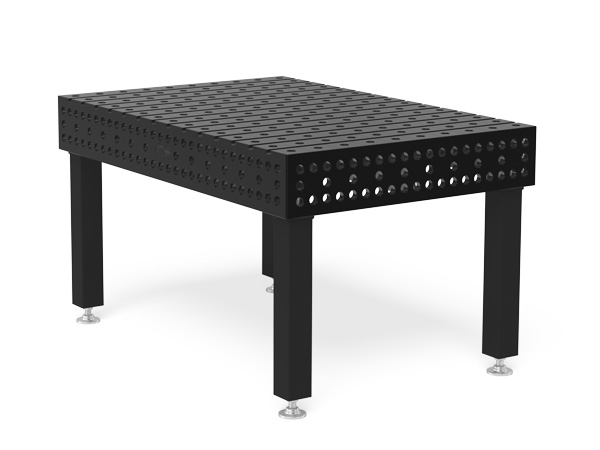
Shipbuilding is among the most demanding environments for welding operations. Massive structural sections, thick-plate materials, multi-pass welds at high amperage, and challenging access geometries all place extreme loads on the workholding infrastructure. A heavy-duty welding table for shipbuilding applications must go far beyond standard fabrication specifications. This article examines what separates true shipyard-grade workholding equipment from ordinary welding tables, with particular attention to steel nitriding treatment, structural load capacity, and the practical realities of maritime fabrication supply chains.
The Unique Welding Challenges of Shipyard Environments
Fabricating hull sections and superstructure assemblies in a modern shipyard involves welding on a scale rarely encountered elsewhere in manufacturing. Panel lines routinely require multiple passes at 300 A to 400 A, with travel speeds that generate sustained heat input into the surrounding steel. The workpieces themselves are enormous — a single hull panel section can span 6 meters by 12 meters and weigh several tonnes. Conventional modular welding tables simply cannot handle these loads or geometries.
Beyond the physical scale, shipyard welding stations face corrosive marine atmospheres that accelerate surface degradation on unprotected steel. Salt-laden air, humidity, and regular wash-down procedures all conspire to shorten the service life of workholding equipment that is not specifically designed for maritime conditions. These environmental factors directly influence the selection of table materials, surface treatments, and structural configurations.
Shipbuilding schedules are famously compressed. A drydock turnaround for a commercial vessel may allow only two to three weeks for hull repairs and modifications. Welding stations must therefore support rapid setup and changeover while maintaining the positional accuracy that ship classification societies demand. The table infrastructure must accommodate both coarse structural tack welding and precision finishing passes on the same setup without refixturing.
Structural Requirements for Heavy-Duty Shipbuilding Tables
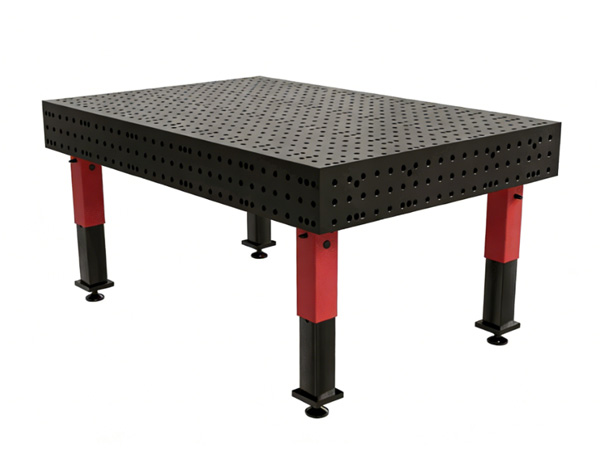
A heavy-duty welding table intended for shipyard service begins with the structural frame. The base must be fabricated from heavy-section steel — typically I-beams or box sections in 200 mm to 300 mm depth — with web and flange thicknesses of at least 10 mm. The frame should be fully welded rather than bolted, with full-penetration groove welds at all critical joints to eliminate any possibility of frame deflection under load.
The working surface of the table must handle point loads from heavy structural members without distortion. For shipbuilding applications, plate thickness of 20 mm to 30 mm on the working surface is common. This plate must be stress-relieved after fabrication to prevent warping during the sustained heat cycles of heavy welding. A table surface that bows more than 1.5 mm per meter under full rated load will create fitting problems that propagate through the entire assembly sequence.
Load capacity for a shipbuilding-class heavy-duty welding table should be specified at a minimum of 3000 kg per square meter of working surface, with the total assembly capable of supporting individual workpieces up to 5000 kg. Some specialist manufacturers offer tables rated to 10,000 kg for the heaviest block assemblies. The specification must account not just for the static weight of the workpiece, but also for the dynamic forces introduced during fit-up, welding, and any flame straightening operations that may occur on the same setup.
Steel Nitriding Treatment for Maritime Surface Durability
Steel nitriding is a thermochemical surface hardening process that proves particularly valuable in shipyard environments. The nitriding reaction — conducted at 500 to 575 degrees Celsius in an ammonia-rich atmosphere — diffuses nitrogen into the surface of the steel to a depth of 0.3 mm to 0.5 mm, creating a surface hardness of 900 HV to 1100 HV. This hardened case resists abrasion from repeated clamping, dragging of heavy plates, and the impact of weld spatter common in high-amperage FCAW operations.
For maritime applications, the nitrogen-rich compound layer on a nitrided heavy-duty welding table provides significantly better corrosion resistance than untreated carbon steel. In salt-air environments, untreated surfaces can show visible rust within days of exposure. A nitrided surface maintains its integrity for years, reducing maintenance downtime and extending the effective service life of the equipment. The manufacturer supplier should be consulted regarding the specific steel grade best suited for nitriding — alloy steels containing chromium, molybdenum, and vanadium respond best to the treatment.
The process also benefits the shipbuilder by reducing spatter adhesion. The lower surface energy of the nitrided layer means that molten weld metal balls off more readily during cooling, cutting cleanup time substantially. On a busy shipyard welding station processing dozens of assemblies per shift, the cumulative time savings from reduced spatter cleanup can amount to one to two hours of productive time per table per day.
Grid and Fixture Integration for Complex Ship Geometries
Modern heavy-duty welding tables for shipbuilding typically incorporate a precision-machined grid pattern on the working surface. These grids — with hole spacing of 50 mm or 100 mm and positional accuracy of +/-0.08 mm — accept a wide range of modular fixture elements. For ship hull panel fabrication, this means that fabricators can use standardized clamps, support risers, and jack screws to handle any geometry that the block design throws at them.
The modular approach is particularly valuable in shipyards where every hull section presents unique geometric challenges. A panel with a 10-degree taper across its width, for example, can be set up using adjustable support blocks and wedge-type clamps on a gridded heavy-duty welding table. The same result would require a dedicated wooden or steel jig for each unique panel configuration — an approach that is neither cost-effective nor practical in a production environment.
Some specialist manufacturers supply shipbuilding-specific fixture packages that include: heavy-duty clamping arms rated to 2000 kg holding force, magnetic base supports for rapid positioning on curved surfaces, and floor-anchoring systems that tie the table into the shipyard concrete pad for maximum rigidity during flame straightening operations.
Supply Chain Considerations for Shipyard Procurement
Procuring a heavy-duty welding table for shipbuilding service requires engagement with manufacturers who understand the maritime fabrication supply chain. The supplier should be capable of providing documentation of materials traceability — test certificates for the base steel, heat treatment records, and nondestructive examination reports for structural welds. Classification society requirements often mandate this documentation before the equipment can be accepted for use in regulated shipyard environments.
Delivery logistics deserve early attention. A fully assembled 6-meter by 3-meter heavy-duty welding table with integral support legs may require special transportation — lowboy trailers, permits for oversized loads, and crane hire for offloading. Some manufacturers offer the table as a kit for field assembly, which simplifies transport but requires competent erectors at the shipyard. Evaluate the total installed cost rather than simply the equipment price when comparing supplier quotations.
Maintenance Protocols for Sustained Performance
Even a properly specified heavy-duty welding table requires routine maintenance to deliver its designed service life in a shipyard. The gridded surface should be kept clean of weld spatter, slag, and debris — accumulated material in grid holes compromises the accuracy of fixture positioning and can introduce fit-up errors. Daily cleaning with a non-metallic scraper and compressed air is standard practice on busy shipyard stations.
Flatness verification should be conducted monthly using a precision level or laser alignment system. Document the results as part of the shipyard quality management system. If measured flatness deviates more than 2 mm from the original specification, the table surface should be machined flat by a qualified workshop — a process that may require removing the table from service for several days. Planning maintenance around scheduled production slowdowns minimizes disruption.
Frequently Asked Questions
Q1: What minimum plate thickness should I specify for a heavy-duty welding table used in shipbuilding?
For shipyard service, a working surface plate thickness of 20 mm to 30 mm is standard. Thicker plate may be required for the highest-amperage applications or where flame straightening will be performed on the same setup. The plate must be stress-relieved after fabrication to prevent warping.
Q2: How does steel nitriding extend the service life of a welding table in marine environments?
Nitriding creates a 0.3 mm to 0.5 mm hardened case with hardness of 900 HV to 1100 HV that resists abrasion and surface degradation. The nitrogen-rich compound layer provides substantially better corrosion resistance than untreated carbon steel in salt-air environments, extending service life from months to years without refinishing.
Q3: What load capacity is appropriate for a shipyard-class heavy-duty welding table?
Specify a minimum of 3000 kg per square meter of working surface, with individual workpiece capacity of at least 5000 kg. For the heaviest block assemblies, specialist manufacturers offer tables rated to 10,000 kg. Account for dynamic loads from fit-up and flame straightening in addition to static workpiece weight.
Q4: How do I verify that a supplier's heavy-duty welding table meets classification society requirements?
Request materials traceability documentation including test certificates for base steel, heat treatment records, and NDE reports for structural welds. Confirm that the manufacturer has experience supplying the maritime sector and can provide references from comparable shipyard installations.
Q5: What is the typical maintenance routine for a shipyard heavy-duty welding table?
Daily cleaning of grid holes and surface spatter. Monthly flatness verification using a precision level or laser system with documented results. Annual or semi-annual machining to restore flatness if measurements exceed 2 mm deviation. Keep the surface free of cutting discs and grinding wheels that could damage the plate.
Conclusion
Selecting and deploying a heavy-duty welding table for shipbuilding demands attention to structural engineering, surface treatment technology, and practical supply chain realities. The combination of thick-plate working surfaces, robust structural frames, steel nitriding treatment for maritime durability, and precision grid systems creates equipment capable of handling the extreme loads and corrosive conditions of modern shipyard fabrication. Working with experienced manufacturers who understand maritime supply chains and classification requirements ensures that the delivered equipment meets both technical specifications and regulatory expectations. A properly specified heavy-duty welding table represents a decades-long asset for any serious shipbuilding operation.
References
Parrish, G. (2022). Gas Nitriding and Nitrocarburizing: Process and Performance (3rd ed.). ASM International.
American Bureau of Shipping. (2023). Rules for Building and Classing Steel Vessels. ABS.
Krauss, G. (2021). Steels: Processing, Structure, and Performance (2nd ed.). ASM International.
Chen, L., Anderson, P., & Thompson, R. (2024). Surface engineering solutions for heavy fabrication workholding. Journal of Manufacturing Systems, 76, 245-260.
-
Heavy-Duty Welding Table for Shipbuilding Industry Guide
-
Efficient Welding Table Layout Design Guide for Industrial Shops
-
Steel Nitriding Welding Table: Benefits and Applications
-
Modular Fixture System for Automotive Welding Production
-
3D Flexible Welding Platform Improves Welding Accuracy and Precision
-
Essential Accessories for Welding Table Optimization
Hebei Yongxin Measuring Tools
Copyright © 2025-2026 http://www.yx-weldingtable.com. All Rights Reserved Hebei Yongxin Measuring ToolsCopyright