






- Navigation -
 Current Location:
NEWS DETAILS
NEWS INFORMATION
Efficient Welding Table Layout Design Guide for Industrial Shops
AUTHOR:yongxin DATE:2026-07-23 18:07:46 HITS:91
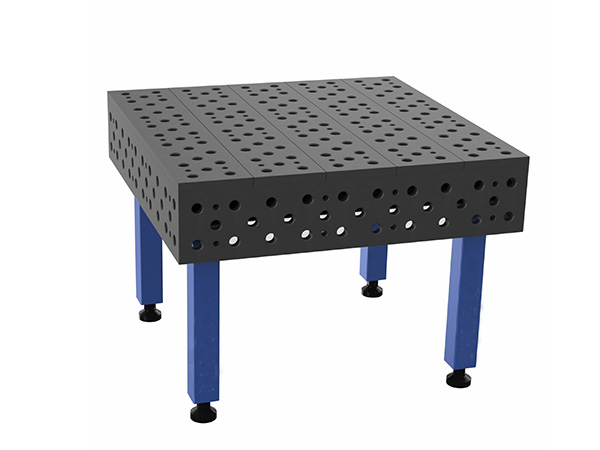
Every seasoned fabrication manager knows that a poorly arranged welding station silently drains productivity, frustrates skilled tradespeople, and drives up operational costs shift after shift. Getting the welding table layout right the first time is one of the most impactful decisions a shop can make. This guide walks through proven principles for designing an efficient industrial welding table layout that supports high-quality output, protects workers, and keeps materials flowing smoothly through the production sequence.
Starting with the Core Work Zone: Your Welding Table Surface
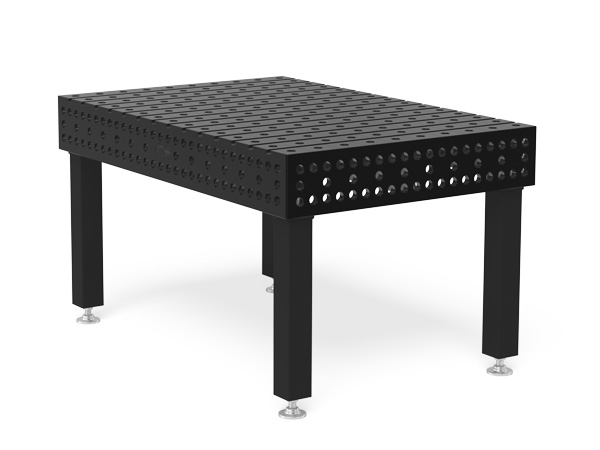
The physical welding table forms the heart of the workstation. Most supplier catalogues offer standard work surfaces in 1200 x 750 mm, 1500 x 900 mm, and 2000 x 1000 mm configurations. For a heavy-duty manufacturing environment, a table at least 1500 x 900 mm provides enough real estate for handling large structural components without crowding. The surface should be manufactured from quality steel with adequate thickness — 12 mm to 20 mm plate is common for production-grade work, with thicker options available from specialist suppliers for high-amperage applications.
When positioning the table, allow a minimum of 1200 mm clearance on at least two sides. This gives the operator room to maneuver around large workpieces, load and unload parts without awkward reaching, and access the table from preferred angles. Cramped layouts force tradespeople into awkward postures that reduce weld quality and increase fatigue-related errors.
Establishing the Primary Material Flow Path
Designing an efficient welding table layout begins with answering one fundamental question: in what direction do raw materials enter and finished weldments leave? Establishing a clear, unobstructed flow path is the single most important layout decision. The classic linear flow — raw materials staged on one side, the welding table at the center, and completed assemblies moving off the opposite side — works because it minimizes backtracking and cross-traffic.
Place the primary storage of base materials within easy reach of the table's incoming side. A dedicated inbound staging zone prevents materials from accumulating on the floor and creating trip hazards. On the outbound side, provide a separate cart or rack for finished weldments. Keeping raw stock and completed work visually and physically separated reduces handling errors and makes inventory tracking straightforward.
Optimizing Accessory Placement: Clamps, Ground Cables, and Consumables
Accessories that the operator reaches for dozens of times per shift deserve prime real estate near the welding table. Clamps, magnetic holders, and positioning blocks should be stored within arm's reach on a dedicated rack or shelf mounted at a comfortable height — typically 900 mm to 1100 mm above the floor — so that the operator never has to bend or leave the work zone unnecessarily.
The welding ground cable deserves special attention. Cables dragged across the floor accumulate damage, create resistance hot spots, and represent a serious safety hazard. Route the ground cable overhead using a cable management arm or a ceiling-mounted cable tray system. This keeps the floor clear, extends cable service life by preventing kinking and abrasion, and makes cable inspection quick and simple during daily start-up checks.
Store filler wire, contact tips, nozzles, and other consumables in sealed containers on a labeled shelf adjacent to the table. Humidity-sensitive materials like flux-cored wire benefit from dedicated heated storage lockers supplied by equipment manufacturers. Keeping consumables organized and protected reduces waste from contamination and supports consistent weld quality batch after batch.
Lighting, Ventilation, and Environmental Controls
Proper illumination is not optional in precision fabrication. Shadows cast across the weld joint obscure the arc puddle, making it harder for the operator to maintain consistent travel speed and weave pattern. Install adjustable LED task lights — 5000 K color temperature delivers the most accurate representation of molten steel — on articulating arms positioned to eliminate reflections and shadows on the work surface.
For fume management, a source-capture extraction arm positioned 200 mm to 300 mm from the weld point removes fumes at the origin before they reach the operator's breathing zone. Capture efficiency for properly positioned source-capture systems runs between 85 % and 95 %, compared to 40 % to 60 % for general room ventilation. Budget for a dedicated extraction unit with adequate airflow — generally 1200 to 1800 cubic meters per hour for a single-operator station — and route ducting directly to the exterior or a central filtration system.
Workstation Organization and the 5S Principle
Applying the 5S methodology to welding table layout pays dividends that compound over months and years of operation. Sort through all items at the station and remove anything that does not directly support the current welding process. Set in order by designating specific locations for every tool and consumable — operators should be able to find what they need within three seconds without looking. Standardize by creating a visual layout diagram posted at the station so every shift starts with the same configuration. Finally, sustain the system through daily end-of-shift cleanup checklists that take no more than ten minutes.
Planning for Growth and Layout Flexibility
A layout that works today may become a bottleneck in eighteen months as production volumes increase or new product lines are introduced. Build flexibility into the initial design by specifying a welding table with a modular grid pattern that accommodates repositionable clamping fixtures. Reserve 20 % of the floor space around the table as a buffer zone — this area can serve as temporary storage during peak demand periods without disrupting the core flow path.
If the shop anticipates automated welding integration, ensure adequate space for a robotic arm arc and a safety perimeter. Automation-ready stations are far less expensive to implement during initial construction than to retrofit later. Coordinate with the equipment supplier early in the layout planning phase to confirm power requirements, grounding specifications, and data cable routing.
Safety Integration in the Layout Design
Safety is not a separate layer added after the layout is complete — it must be embedded in every decision from the outset. Fire-resistant flooring or floor mats around the welding station prevent sparks from igniting floor debris. A dedicated fire extinguisher rated for Class D and electrical fires — typically a dry powder or CO2 unit — should be mounted within 3 meters of the table, clearly visible, and checked monthly. Emergency stop buttons for power supply and gas lines should be accessible without reaching over hot workpieces.
Electrical safety requires dedicated circuit protection for the welding power supply, with properly sized overcurrent protection and a ground fault circuit interrupter. Bonding and grounding of the work table and surrounding metal structures prevents shock hazards, particularly in environments with conductive flooring or wet conditions. All electrical connections should be contained in properly rated enclosures to protect against dust and spatter infiltration.
Frequently Asked Questions
Q1: What is the ideal clearance distance around a welding table for safe and efficient operation?
A minimum of 1200 mm clearance on at least two sides is recommended. This provides room for maneuvering large workpieces, loading and unloading from multiple angles, and safe passage of material handling equipment. Three-sided clearance is preferred where floor space permits.
Q2: How should I route the welding ground cable to maximize safety and equipment life?
Overhead cable routing using a cable management arm or ceiling tray system is strongly preferred. This eliminates floor-level cable runs that suffer from kinking, abrasion, and moisture exposure. Inspect cable condition at the connections and along the full length during every shift start-up.
Q3: What extraction airflow rate is adequate for a single-operator welding station?
For source-capture systems, 1200 to 1800 cubic meters per hour provides effective fume removal at the stated capture distance of 200 mm to 300 mm from the weld point. Systems with lower airflow rates must be positioned closer, which can interfere with the operator's sightline and torch approach.
Q4: How do I design a welding table layout that can accommodate future automation?
Reserve adequate space for a robotic arm arc and safety perimeter at the outset. Specify a welding table with a modular grid pattern compatible with automated clamping fixtures. Coordinate with your automation equipment supplier early to confirm power, grounding, and data requirements before finalizing the layout.
Q5: What daily maintenance checks should be built into the welding station routine?
A practical daily checklist covers: cable and connection integrity, grounding resistance, extraction system airflow verification, fire extinguisher accessibility, floor condition around the table, and consumable stock levels. Five to ten minutes at shift start prevents costly disruptions during production hours.
Conclusion
Designing an efficient welding table layout is a blend of engineering principle and practical shop-floor wisdom. Getting the material flow path correct, positioning accessories where they serve the operator rather than impede progress, ensuring adequate lighting and fume extraction, and embedding safety into every layout decision — these fundamentals produce a workstation that delivers consistent quality, protects skilled tradespeople, and supports a healthy bottom line for the manufacturing operation. The investment in thoughtful planning today pays dividends in productivity, reduced rework, and worker satisfaction for years to come.
References
American Welding Society. (2023). Safety and Health for Welders and Fabricators. Miami, FL: AWS.
Kalpakjian, S., & Schmid, S. R. (2021). Manufacturing Engineering and Technology (8th ed.). Pearson.
Occupational Safety and Health Administration. (2022). 29 CFR 1910 Subpart Q: Welding, Cutting, and Brazing. U.S. Department of Labor.
ACGIH. (2021). Industrial Ventilation: A Manual of Recommended Practice (30th ed.). ACGIH.
-
Heavy-Duty Welding Table for Shipbuilding Industry Guide
-
Efficient Welding Table Layout Design Guide for Industrial Shops
-
Steel Nitriding Welding Table: Benefits and Applications
-
Modular Fixture System for Automotive Welding Production
-
3D Flexible Welding Platform Improves Welding Accuracy and Precision
-
Essential Accessories for Welding Table Optimization
Hebei Yongxin Measuring Tools
Copyright © 2025-2026 http://www.yx-weldingtable.com. All Rights Reserved Hebei Yongxin Measuring ToolsCopyright