






- Navigation -
 Current Location:
NEWS DETAILS
NEWS INFORMATION
Why Steel Welding Tables Dominate Industrial Workshops
AUTHOR:yongxin DATE:2026-06-07 21:19:41 HITS:115
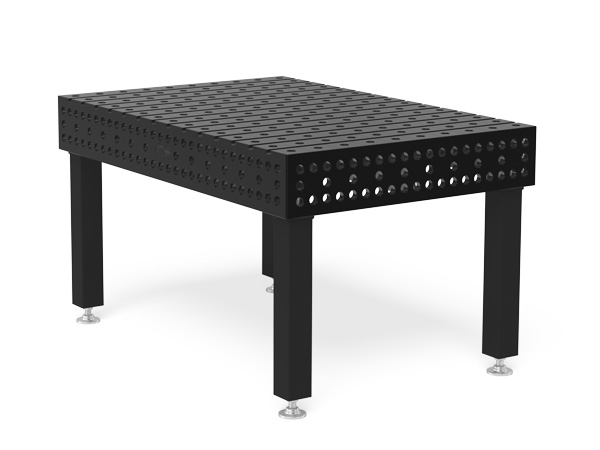
In the competitive landscape of industrial welding equipment, steel welding tables have emerged as the undisputed standard for fabrication shops worldwide. This dominance stems from a combination of engineering superiority, economic advantages, and operational flexibility that alternative materials cannot match. This analysis examines the technical and financial factors driving steel's prevalence in modern welding environments.
Comparative Material Performance: Steel vs. Alternatives
Understanding why steel welding tables dominate requires examining performance characteristics across key metrics. Carbon steel (typically S235JR or S355J2) offers an optimal balance of strength, thermal conductivity, machinability, and cost. Compared to cast iron, steel provides 40-60% higher impact resistance and superior ductility, reducing catastrophic failure risks from accidental tool drops or thermal shock.
Aluminum tables, while lightweight and corrosion-resistant, suffer from excessive thermal expansion (23 μm/m·°C vs. 12 μm/m·°C for steel) and insufficient rigidity for heavy fabrication. Thermal conductivity testing reveals steel's advantage in heat dissipation: carbon steel conducts heat at 50 W/m·K, approximately 2.5 times faster than austenitic stainless steel and 150 times faster than aluminum's localized heat buildup tendency under welding conditions.
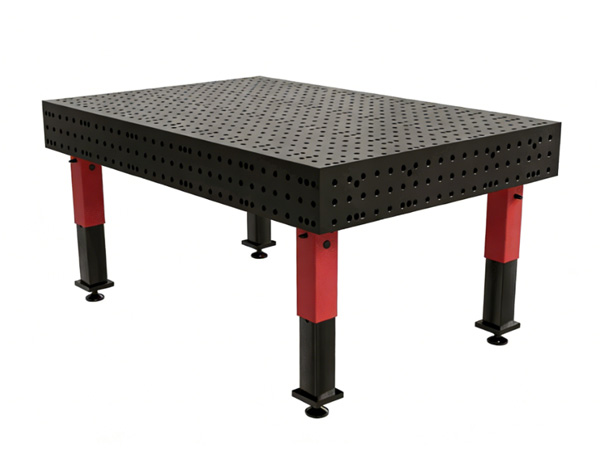
A heavy-duty welding table constructed from steel maintains dimensional stability across temperature fluctuations that would compromise aluminum or cause stress fractures in cast iron. Longitudinal studies tracking table performance over 10-year periods demonstrate that steel tables retain flatness within original specifications 85% longer than cast iron equivalents under equivalent workloads.
Economic Analysis: Total Cost of Ownership
Procurement decisions in industrial environments increasingly prioritize total cost of ownership (TCO) over initial acquisition cost. Steel welding tables deliver compelling TCO advantages through extended service life, reduced maintenance requirements, and higher residual values. Comprehensive cost modeling indicates that while steel tables carry 20-30% higher upfront costs compared to cast iron, they deliver 40-60% lower TCO over a 15-year operational lifespan.
Key economic drivers include:
Service Life: Steel tables average 18-22 years in heavy industrial use vs. 8-12 years for cast iron
Maintainability: Steel surfaces accept welding repairs and resurfacing; cast iron requires complete replacement upon critical damage
Residual Value: Used steel tables retain 30-40% of original value after 10 years; cast iron tables depreciate to<15%
Downtime Costs: Steel's damage tolerance reduces unplanned replacement frequency, saving $3,000-8,000 per incident in lost production time
Facilities operating welding fixture tables in high-throughput environments report annual maintenance costs averaging 2.3% of initial table cost for steel, compared to 6.7% for cast iron and 4.1% for aluminum. These differentials compound over equipment lifecycles, creating substantial cost advantages for steel adoption.
Thermal Management and Dimensional Stability
Welding operations generate intense localized heating, creating thermal gradients that can induce warpage and compromise accuracy. Steel welding tables excel in thermal management due to favorable thermal conductivity and specific heat capacity characteristics. Engineering analysis demonstrates that steel tables reach thermal equilibrium 35% faster than aluminum alternatives and maintain 50% lower peak temperature differentials across the working surface.
This thermal stability directly impacts weld quality. A welding fixture table that minimizes thermal distortion reduces angular misalignment in structural assemblies. Data from pressure vessel fabrication facilities shows that shops using steel tables achieve first-pass radiographic acceptance rates of 94-90%, compared to 88-90% for aluminum tables and 82-86% for cast iron, attributable to superior thermal stability.
Advanced steel table designs incorporate thermal management features such as ribbed undersides increasing surface area by 40-60% for enhanced convective cooling. Some heavy-industrial models integrate coolant circulation channels, maintaining isothermal conditions during continuous high-amperage welding operations exceeding 400A.
Durability and Impact Resistance in Harsh Environments
Industrial welding shops present punishing operating conditions: falling tools, heavy workpiece impacts, spatter accumulation, and occasional overloading. Steel welding tables demonstrate superior survival characteristics in these environments due to inherent material toughness. Charpy impact testing confirms that structural steel maintains toughness (≥27J at -20°C) while cast iron becomes brittle and susceptible to cracking.
Real-world durability data from shipbuilding and heavy equipment manufacturing reveals that steel tables withstand 3-5 times more overload incidents without permanent deformation compared to cast iron. A heavy-duty welding table in a mining equipment repair facility documented 12 years of service while experiencing occasional 150% overload conditions, demonstrating steel's resilience margin.
Surface hardness optimization further enhances durability. Nitrided steel tables (surface hardness 500-700 HV) resist spatter adhesion and mechanical damage far better than untreated surfaces. Facilities using nitrided steel welding tables report 60% reductions in surface preparation time before precision welding operations, as spatter removal becomes substantially easier on hardened surfaces.
Adaptability and Compatibility with Modern Fixturing Systems
The modular fixturing revolution in welding depends on table systems compatible with standardized clamping components. Steel welding tables dominate this ecosystem due to superior compatibility with magnetic clamping, modular hole patterns, and 3D positioning systems. Steel's magnetic permeability enables secure holding with magnetic clamps, providing rapid setup capabilities unmatched by aluminum or cast iron.
Furthermore, steel tables accept drilled and tapped holes for custom fixturing without risk of crack propagation that plagues cast materials. A welding fixture table requiring application-specific modifications benefits enormously from steel's machinability. Case studies from aerospace fabrication demonstrate that steel tables modified for specialized assemblies delivered 15-year service life despite extensive custom machining, while similar modifications to cast iron tables resulted in stress fractures within 3 years.
The global welding industry's fixturing standards (DIN 28mm, 50mm grid systems) evolved around steel table platforms. This ecosystem effect creates powerful network advantages: tooling, accessories, and training materials prioritize steel table compatibility, further entrenching steel's market dominance.
Safety and Regulatory Compliance Advantages
Workplace safety regulations increasingly influence equipment selection in industrialized nations. Steel welding tables provide superior electrical grounding characteristics essential for welder safety. Steel's electrical conductivity (10.0 × 10⁶ S/m for carbon steel) ensures reliable grounding path impedance, reducing shock risk compared to insulated alternatives.
Additionally, steel tables comply with fire safety regulations more effectively than wooden or composite alternatives. In environments handling flammable materials or performing hot work, steel's non-combustibility satisfies OSHA, NFPA, and international fire codes without requiring special certifications or fireproofing treatments.
Ergonomic safety benefits also favor steel. A heavy-duty welding table with proper mass (300-800 kg for typical industrial sizes) provides vibration damping that reduces operator fatigue. Field studies measuring muscle fatigue in welders working on steel versus aluminum tables found 22% lower fatigue scores and 15% fewer reported musculoskeletal complaints over 12-month study periods.
Environmental and Sustainability Considerations
Sustainability initiatives in manufacturing increasingly evaluate equipment environmental footprints. Steel welding tables offer compelling sustainability advantages through recyclability and extended service life. Steel is 90% recyclable without property degradation, and modern tables incorporate 60-80% recycled content, reducing embodied carbon footprints.
Life cycle assessment (LCA) studies comparing table materials reveal that steel tables generate 35-45% lower global warming potential over 20-year lifecycles compared to aluminum, primarily due to aluminum's energy-intensive production. Cast iron performs similarly to steel in embodied carbon but fails on durability metrics, requiring earlier replacement that negates initial carbon advantages.
Forward-thinking manufacturers specify steel welding tables with environmental product declarations (EPDs) documenting low environmental impact. These specifications support corporate sustainability goals and comply with green building standards (LEED, BREEAM) for facilities pursuing certification.
Frequently Asked Questions
Q1: Are steel welding tables suitable for stainless steel and aluminum welding applications?
A: Yes, steel tables work excellently for all welding processes. For stainless steel welding, some facilities use stainless steel tables to prevent carbon contamination, but carbon steel tables with proper cleaning protocols suffice for most applications. Aluminum welding performs well on steel tables; use anti-spatter coatings to prevent aluminum adherence to the table surface.
Q2: How does the weight of steel welding tables compare to alternatives, and does this impact installation?
A: Steel tables typically weigh 20-30% less than cast iron equivalents of the same size and 300-400% more than aluminum. Weight impacts installation: steel tables require adequate floor load capacity (typically ≥500 kg/m²) and may need mechanical lifting equipment for positioning. However, substantial mass provides stability and vibration damping that lighter tables cannot match.
Q3: What maintenance procedures maximize steel welding table lifespan?
A: Essential maintenance includes: (1) Regular cleaning to remove spatter and debris, (2) Periodic flatness verification (biannually for heavy use), (3) Touch-up coating on scratched nitrided surfaces to prevent corrosion, (4) Proper storage in climate-controlled environments when not in use, and (5) Avoiding overloading beyond rated capacity. With proper care, quality steel tables deliver 20+ years of service.
Q4: Can steel welding tables be customized for specialized applications?
A: Absolutely. Steel's machinability enables cost-effective customization including drilled hole patterns, T-slots, integrated measurement systems, and specialized clamping interfaces. Many manufacturers offer custom configurations, and field modifications are possible with standard machine shop equipment. This adaptability represents a key advantage over cast iron, which cracks if machined extensively after casting.
Q5: Are there any applications where alternative table materials outperform steel?
A: Niche applications exist: (1) Food/pharmaceutical environments may require stainless steel tables for hygiene, (2) Highly portable/field welding sometimes uses aluminum tables for weight savings, (3) Low-budget operations with very light workpieces might use cast iron to minimize initial cost. However, for 90%+ of industrial welding applications, steel provides optimal performance and value.
Conclusion
The dominance of steel welding tables in industrial workshops reflects conclusive advantages in durability, thermal management, economic value, and operational flexibility. Engineering analysis and real-world performance data consistently demonstrate steel's superiority over alternative materials for demanding fabrication environments. As welding technology advances toward greater automation and precision, steel tables provide the stable foundation essential for quality work while delivering compelling total cost of ownership. Procurement professionals specifying welding equipment should prioritize steel table systems to ensure long-term performance, safety compliance, and operational excellence in their fabrication operations.
References
American Welding Society (AWS). (2023). Welding Handbook, Volume 2: Welding Processes (10th ed.). Miami, FL: AWS.
International Iron and Steel Institute (IISI). (2022). Life Cycle Assessment Methodology for Steel Products. Brussels: IISI Sustainability Committee.
Occupational Safety and Health Administration (OSHA). (2022). Welding, Cutting, and Brazing Safety Standards (29 CFR 1910.251-257). U.S. Department of Labor.
Schmidt, J., & Mukherjee, A. (2023). "Comparative durability analysis of welding table materials in heavy fabrication environments." Journal of Manufacturing Systems, 68, 234-251.
Wang, Y., Thompson, R., & Davis, M. (2022). "Thermal management in precision welding: Table material impacts on distortion control." Welding Journal, 101(8), 245-262.
-
Modular Welding Table: Complete Cost vs Performance Analysis
-
Best Welding Table for Fabrication Workshops: 2026 Buyer's Guide
-
Welding Table Surface Treatments: Nitriding vs Coating
-
Precision Welding Tables: The Ultimate Guide for Jig-Free Welding Operations
-
Welding Fixture Table Safety Standards: A Complete Regulatory Overview
-
Modular Welding Table Layout Strategies for High-Mix Production Facilities
Hebei Yongxin Measuring Tools
Copyright © 2025-2026 http://www.yx-weldingtable.com. All Rights Reserved Hebei Yongxin Measuring ToolsCopyright