






- Navigation -
 Current Location:
NEWS DETAILS
NEWS INFORMATION
What Is a Welding Table? Complete Industrial Guide
AUTHOR:yongxin DATE:2026-05-31 16:27:49 HITS:55
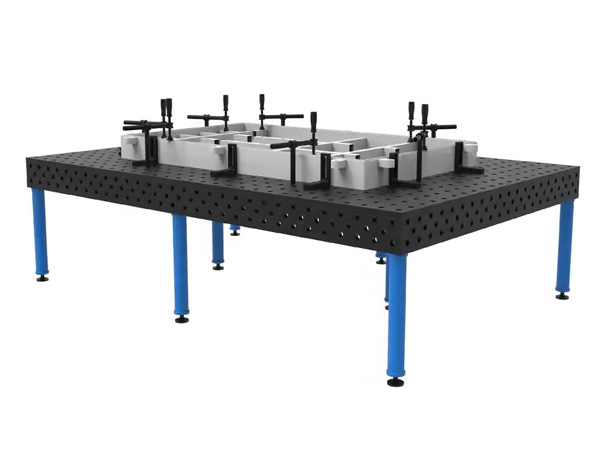
Fundamental Definition and Purpose of Welding Tables
A Welding Table is a specialized work surface designed specifically for welding operations, combining flatness, grounding, and fixturing capabilities that general-purpose workbenches cannot provide. Unlike standard tables, Welding Table designs incorporate grounded surfaces that safely return welding current, slotted tops that accept modular fixturing components, and robust construction that withstands the thermal and mechanical stresses inherent to welding processes.
The primary purpose of any Welding Table involves providing a stable, reference-grade surface that enables precise workpiece positioning and alignment throughout fabrication operations. Dimensional accuracy of welded assemblies depends directly on the flatness and stability of the Welding Table surface, making quality tables essential for precision work where tolerances matter and scrap reduction drives profitability.
Core Components and Structural Design Features
Professional Welding Table construction incorporates heavy-gauge steel plate surfaces, reinforced structural frames, precision-machined reference surfaces, and integrated grounding systems. The tabletop surface must maintain flatness within tight tolerances (typically 0.005-0.010 inches across the working surface) to ensure consistent workpiece positioning. Steel plate thickness typically ranges from 3/8" to 1" depending on Welding Table size and intended application severity.
Grid pattern construction distinguishes quality Welding Table designs from inferior alternatives that use simple plate surfaces. Precision-machined grid patterns (typically 1" or 2" spacing) provide standardized mounting points for clamps, stops, and fixture components that enable rapid, repeatable workpiece positioning. This grid architecture transforms the Welding Table from a simple surface into a versatile fixturing system that adapts to diverse fabrication requirements.
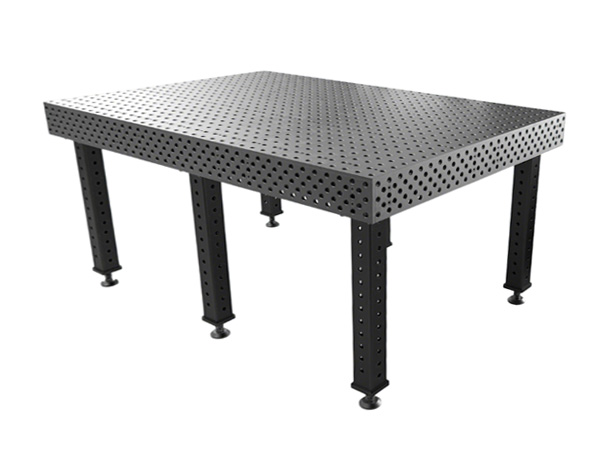
Grounding Systems and Electrical Safety Integration
Integrated grounding represents a critical safety feature that distinguishes Welding Table systems from general-purpose work surfaces. Proper grounding provides safe return paths for welding current while preventing dangerous voltage buildup that could endanger operators. Quality Welding Table designs incorporate verified grounding connections with documented resistance measurements that confirm electrical safety compliance.
Grounding system maintenance requirements for Welding Table equipment include periodic verification of ground continuity, inspection of connection points for corrosion or looseness, and documentation of test results for safety compliance audits. Establish grounding verification schedules based on operating conditions and regulatory requirements to ensure continuous protection from electrical hazards associated with Welding Table use.
Weight Capacity and Structural Load Ratings
Welding Table weight capacity specifications indicate maximum workpiece and fixturing loads that tables can support without deflection or damage. Structural steel frame design, leg construction, and reinforcement details all contribute to load-bearing capability. Specify Welding Table equipment with adequate capacity for your heaviest intended workloads plus reasonable safety margins to ensure reliable performance under peak loading conditions.
Deflection characteristics under load affect Welding Table suitability for precision applications where surface flatness directly impacts fabrication quality. Premium Welding Table manufacturers publish deflection data for various load conditions, enabling informed selection based on application requirements. For precision welding work, select Welding Table systems with minimal deflection under expected loads to maintain dimensional accuracy throughout operations.
Modular Fixturing Systems and Accessories
Modular fixturing compatibility transforms Welding Table capabilities by enabling rapid configuration changes for different workpiece geometries and production requirements. Clamping systems, stops, risers, angle plates, and specialized holding fixtures attach to Welding Table grid patterns using standardized mounting interfaces. This modularity reduces changeover times and enables one table to serve multiple production purposes efficiently.
Accessory ecosystem considerations affect long-term Welding Table value and versatility. Manufacturers with comprehensive accessory offerings provide fixturing solutions for diverse applications without requiring custom fabrication. Evaluate Welding Table accessory availability and compatibility when selecting equipment to ensure that future expansion and specialization needs can be addressed without replacing core table infrastructure.
Thermal Management and Distortion Prevention
Heat management capabilities in Welding Table systems prevent thermal distortion that compromises workpiece accuracy during welding operations. Quality Welding Table designs incorporate mass and construction that absorbs welding heat without significant temperature rises that could affect dimensional stability. Some premium tables incorporate active cooling features that accelerate heat dissipation for high-duty-cycle production environments.
Distortion prevention strategies extend beyond table design to include welding sequence optimization, workpiece fixturing techniques, and pre-distortion compensation methods. While the Welding Table provides a stable reference surface, fabricators must employ appropriate techniques to minimize heat-induced distortion in welded assemblies. Quality Welding Table manufacturers provide guidance on distortion prevention techniques that complement their equipment capabilities.
Surface Maintenance and Flatness Preservation
Maintaining Welding Table surface flatness requires regular cleaning, periodic inspection, and occasional resurfacing to preserve accuracy over extended service life. Welding spatter, grinding debris, and process contaminants accumulate on surfaces, creating irregularities that affect workpiece positioning. Establish cleaning schedules and procedures that preserve Welding Table accuracy throughout production operations.
Flatness verification using precision straightedges, feeler gauges, or coordinate measuring equipment identifies surface degradation requiring intervention. Documented flatness measurements support quality assurance programs and help predict when resurfacing becomes necessary. Proactive Welding Table maintenance preserves accuracy, extends service life, and protects investments in fabrication equipment.
Workplace Safety Integration and Ergonomic Considerations
Safe Welding Table integration into overall workshop safety programs requires attention to ventilation, fire prevention, electrical safety, and personal protective equipment requirements. Local exhaust ventilation captures fumes at the source before they disperse into the workspace, while fire-resistant Welding Table surfaces prevent ignition of surfaces beneath or around the table during welding operations.
Ergonomic considerations in Welding Table selection include appropriate working heights, accessibility for operators of different statures, and clearance for material handling equipment. Proper Welding Table height and configuration reduce operator fatigue, improve quality consistency, and enhance overall productivity. Invest in ergonomic assessment during Welding Table selection to optimize workplace conditions for production personnel.
Industrial Applications and Use Case Examples
Automotive manufacturing represents one of the most demanding Welding Table applications, requiring precision positioning, rapid changeover, and high production rates that stress equipment durability. Robotic welding cells incorporate dedicated Welding Table systems optimized for automated material handling, while manual assembly stations use versatile Welding Table configurations that support diverse vehicle component fabrication requirements.
Aerospace fabrication demands the highest precision Welding Table capabilities, with tolerances measured in thousandths of an inch and documentation requirements that verify every aspect of fabrication process control. Welding Table selection for aerospace applications requires meticulous evaluation of flatness specifications, material certifications, and quality system compliance to meet stringent regulatory requirements.
Making Strategic Welding Table Investment Decisions
Selecting appropriate Welding Table equipment requires evaluating production requirements, precision needs, budget constraints, and long-term operational objectives. Quality Welding Table investments deliver returns through improved quality, reduced rework, enhanced productivity, and extended service life. Consult with experienced suppliers who understand your specific requirements and can recommend optimized solutions that deliver value across multiple performance dimensions.
Remember that your Welding Table serves as the foundation for every fabrication operation, directly affecting quality, productivity, and safety outcomes. Invest the time necessary to evaluate options thoroughly, visit installations similar to your intended application, and prioritize quality and capability over initial cost savings. Your strategic Welding Table selection protects your fabrication operation's competitiveness and supports long-term business success.
References
American Welding Society. (2021). AWS D14.1/D14.1M:2021 - Specification for fabrication of miscellaneous steel for building construction. AWS Publications.
Occupational Safety and Health Administration. (2020). OSHA 1910 Subpart Q - Welding, cutting, and brazing requirements. U.S. Department of Labor.
American National Standards Institute. (2018). ANSI/AWS F1.3:2018 - Ventilation guide for welding and cutting. AWS Standards Development.
International Institute of Welding. (2021). IIW guidelines for welding fabrication safety and quality. IIW Technical Reports.
American Society of Mechanical Engineers. (2020). ASME BPVC Section IX - Welding, brazing, and fusing qualifications. ASME Standards.
-
Modular Welding Table: Complete Cost vs Performance Analysis
-
Best Welding Table for Fabrication Workshops: 2026 Buyer's Guide
-
Welding Table Surface Treatments: Nitriding vs Coating
-
Precision Welding Tables: The Ultimate Guide for Jig-Free Welding Operations
-
Welding Fixture Table Safety Standards: A Complete Regulatory Overview
-
Modular Welding Table Layout Strategies for High-Mix Production Facilities
Hebei Yongxin Measuring Tools
Copyright © 2025-2026 http://www.yx-weldingtable.com. All Rights Reserved Hebei Yongxin Measuring ToolsCopyright