






- Navigation -
 Current Location:
NEWS DETAILS
NEWS INFORMATION
Welding Table: Key Features and Industrial Applications in Modern Fabrication
AUTHOR:yongxin DATE:2026-05-08 16:12:49 HITS:99
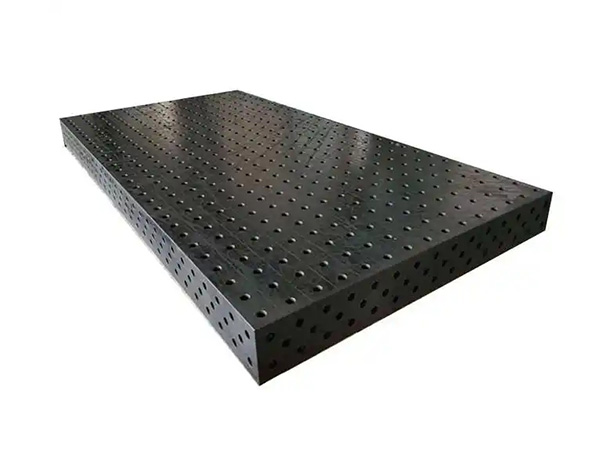
Structural Engineering Defines the Foundation of Welding Precision
A Welding Table is a fundamental piece of industrial fabrication equipment designed to provide a stable, flat, and thermally resistant working surface for welding and assembly operations. Unlike general-purpose workbenches, it is engineered specifically to maintain geometric accuracy under high heat, mechanical load, and repeated impact conditions. Its structural integrity directly determines weld quality and repeatability in industrial environments.
Material Selection Determines Strength and Thermal Behavior
The performance of a Welding Table is heavily influenced by material choice. Most industrial-grade tables are manufactured from carbon steel or cast iron. Steel tables offer versatility and cost efficiency, while cast iron versions provide superior vibration damping and long-term dimensional stability. Material thickness is also critical, as it affects heat resistance and deformation control during continuous welding cycles.
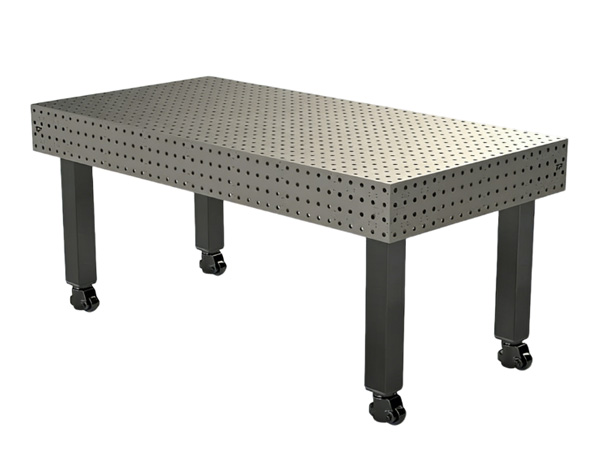
Surface Flatness Is Critical for Dimensional Accuracy
Flatness is one of the most important engineering requirements of a Welding Table. Even minor surface deviation can lead to misalignment in welded assemblies. High-end tables undergo CNC machining or surface grinding to achieve tight tolerances. This ensures repeatable positioning, which is essential in precision industries such as automotive and aerospace manufacturing.
Grid Hole System Enables Flexible Fixturing Architecture
Modern Welding Tables often feature a precision-machined grid hole system that allows modular fixturing. These holes enable quick installation of clamps, stops, and positioning tools. This modular approach significantly reduces setup time and increases production efficiency, especially in batch manufacturing environments.
Clamping Systems Ensure Workpiece Stability During Welding
Clamping is a core functional element of any Welding Table. Mechanical, pneumatic, or hydraulic clamps are used to secure workpieces during welding operations. Proper clamping prevents movement, reduces distortion, and ensures consistent weld geometry across production cycles.
Load Distribution Enhances Structural Reliability
A properly engineered Welding Table distributes load evenly across its structure. Uneven load concentration can lead to deformation and reduced accuracy. Reinforced rib structures and thick base frames are commonly used to maintain stability under heavy industrial loads.
Thermal Resistance Supports Continuous Industrial Operation
During welding processes, surfaces are exposed to extreme localized heat. A high-quality Welding Table must resist thermal expansion and maintain dimensional integrity. Heat-resistant coatings and alloy-based materials help reduce warping and extend service life.
Industrial Applications Span Across Multiple Sectors
Welding Tables are widely used in automotive manufacturing, structural steel fabrication, shipbuilding, construction equipment production, and general metalworking industries. Their role is essential in ensuring consistent weld quality and assembly accuracy.
Automation Integration Improves Production Efficiency
In modern manufacturing systems, Welding Tables are often integrated with robotic welding arms and CNC-based fabrication systems. A stable and precisely aligned table ensures accurate robotic path execution, reducing errors and improving production speed.
Maintenance and Surface Protection Extend Service Life
Regular maintenance is essential to preserve performance. Cleaning welding spatter, inspecting flatness, and maintaining surface coatings prevent degradation over time. Advanced treatments such as nitriding or anti-corrosion coatings further enhance durability.
Engineering Role in Modern Fabrication Systems
From an engineering perspective, a Welding Table is not just a support structure but a precision alignment platform. It plays a critical role in ensuring repeatability, reducing assembly errors, and improving overall manufacturing efficiency.
References
Cary, H.B. Modern Welding Technology
Kalpakjian, S. & Schmid, S. Manufacturing Engineering and Technology
Lancaster, J.F. The Physics of Welding
AWS (American Welding Society) Welding Handbook
-
Modular Fixture System for Welding Automation Efficiency
-
3D Flexible Welding Platform Advantages in Fabrication
-
Welding Bench Setup Guide for Workshop Efficiency
-
Steel vs Aluminum Welding Tables: Frame System Comparison
-
Welding Fixture Table Setup Guide for Better Accuracy
-
Why Steel Welding Tables Dominate Industrial Workshops
Hebei Yongxin Measuring Tools
Copyright © 2025-2026 http://www.yx-weldingtable.com. All Rights Reserved Hebei Yongxin Measuring ToolsCopyright