






- Navigation -
 Current Location:
NEWS DETAILS
NEWS INFORMATION
Welding Bench vs Welding Table: Key Differences Explained
AUTHOR:yongxin DATE:2026-05-28 14:21:05 HITS:147
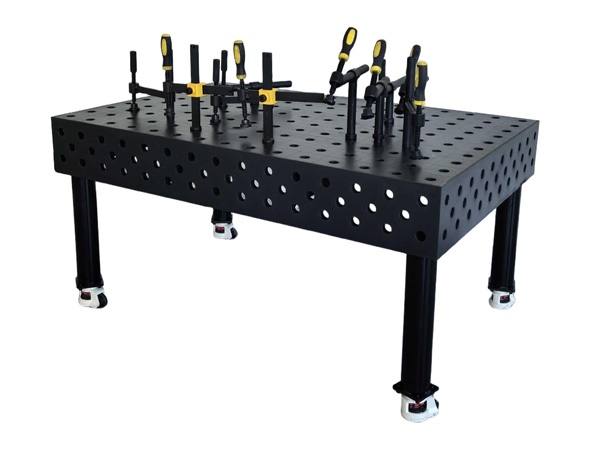
Structural Design and Load-Bearing Capabilities
The structural design of a Welding Bench typically prioritizes simplicity and portability over the heavy-duty construction required for precision welding work. Standard Welding Bench designs use lighter structural members, thinner work surfaces, and less robust leg constructions that cannot match the load capacity of purpose-built Welding Table equipment. This lighter construction limits Welding Bench suitability for heavy welding applications where workpiece mass or fixturing loads stress equipment capabilities.
Precision Welding Table systems incorporate substantially heavier structural elements, thicker work surfaces, and reinforced frames that provide the stability and load capacity required for demanding fabrication work. The investment in robust construction pays dividends through extended service life, consistent accuracy, and reliable performance under production stresses that would damage or deform lighter Welding Bench alternatives.
Grounding and Electrical Safety Features
Integrated grounding systems distinguish professional Welding Table equipment from standard Welding Bench designs that typically lack dedicated electrical safety features. Quality Welding Table systems provide verified ground paths with documented resistance measurements that ensure operator safety during welding operations. This electrical safety integration represents a critical difference for professional welding applications where operators work with high-current welding equipment daily.
Standard Welding Bench equipment requires separate grounding arrangements that add setup complexity and potential for improper connections that compromise safety. Fabricators using Welding Bench equipment must implement additional verification procedures to ensure grounding adequacy, adding procedural requirements that purpose-designed Welding Table systems eliminate through integrated safety features.
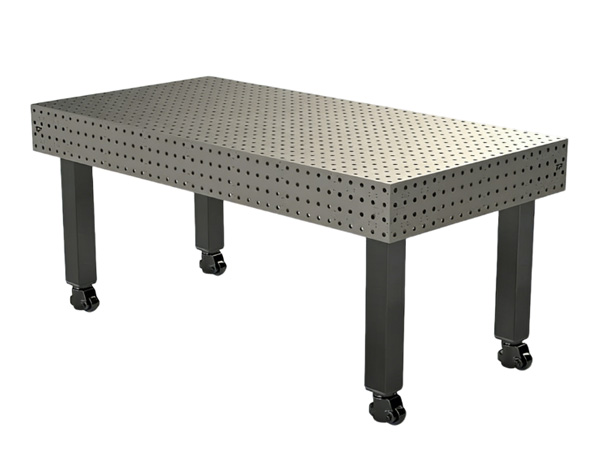
Precision and Dimensional Accuracy Capabilities
Surface flatness specifications reveal fundamental differences between Welding Bench and Welding Table equipment precision capabilities. Professional Welding Table systems maintain surface flatness within 0.005-0.010 inches across working surfaces, enabling precise workpiece positioning that Welding Bench equipment cannot achieve. This precision difference directly affects dimensional accuracy of finished fabrication work.
The Welding Bench construction priorities of portability and economy result in surface flatness tolerances that may exceed acceptable limits for precision fabrication work. While adequate for simple holding and tack welding tasks, Welding Bench surfaces may deflect under clamping forces or thermal loading in ways that compromise dimensional accuracy for precision assemblies.
Modular Fixturing and Positioning Capabilities
Modular fixturing system compatibility represents a significant capability advantage for Welding Table equipment over standard Welding Bench alternatives. Purpose-designed Welding Table grid patterns accept standardized clamping components, stops, and positioning aids that enable rapid, repeatable workpiece setup. This fixturing capability dramatically improves production efficiency compared to Welding Bench approaches that require custom clamping arrangements for each job.
Standard Welding Bench equipment lacks standardized mounting provisions, requiring operators to improvise clamping solutions that consume setup time and produce inconsistent results. While adequate for simple projects, the Welding Bench approach becomes inefficient for production environments where repeated setups and consistent positioning accuracy drive profitability.
Thermal Management and Distortion Resistance
Heat dissipation characteristics differ substantially between Welding Bench and proper Welding Table systems due to differences in mass, construction, and material quality. The substantial work surfaces of quality Welding Table equipment absorb welding heat without significant temperature rises that could affect dimensional stability. This thermal mass provides natural heat management that lighter Welding Bench constructions cannot match.
Thermal distortion in Welding Bench surfaces during extended welding operations can compromise workpiece positioning and accuracy, particularly for large or complex assemblies. The Welding Table thermal management advantage becomes increasingly significant as welding intensity and duration increase, making proper table equipment essential for production welding environments.
Durability and Long-Term Service Life
Service life expectations differ dramatically between quality Welding Table systems and standard Welding Bench equipment due to construction quality differences and design priorities. Professional Welding Table investment delivers decades of reliable service when properly maintained, while Welding Bench equipment typically requires replacement after relatively limited service periods due to wear, damage, orobsolescence.
Residual value considerations favor Welding Table investments over Welding Bench purchases when evaluating total cost of ownership. Quality Welding Table equipment retains significant resale value, while lower-quality Welding Bench alternatives depreciate rapidly and require more frequent replacement. This residual value difference affects actual cost of ownership calculations for capital equipment decisions.
Cost Considerations and Value Analysis
Initial cost differences between Welding Bench and Welding Table equipment reflect construction quality, capability, and feature variations that affect long-term value. While Welding Bench equipment offers lower acquisition costs, total cost of ownership analysis including replacement frequency, quality impacts, and productivity effects often favors higher initial investment in quality Welding Table equipment.
Application matching determines whether Welding Bench or Welding Table represents the appropriate investment. Simple hobby or occasional use applications may fully justify Welding Bench acquisition costs, while production fabrication environments typically benefit from Welding Table capabilities that justify additional investment through quality improvements, productivity gains, and extended service life.
Making Appropriate Equipment Selection Decisions
Evaluating Welding Bench versus Welding Table requires honest assessment of production requirements, quality standards, and operational objectives that will guide equipment investments. Consider current and anticipated future needs when evaluating options, as equipment upgrades or replacements impose additional costs that favor appropriate initial selection. Quality Welding Table systems accommodate operational growth, while Welding Bench equipment may limit expansion capabilities.
Remember that equipment selection affects every welding operation performed in your facility, making this decision one of the most consequential capital equipment choices for fabrication businesses. Invest the analysis time necessary to understand your requirements, evaluate options against those requirements, and prioritize long-term value creation over short-term cost minimization. Your Welding Bench or Welding Table selection shapes your operational capabilities for years to come.
References
American Welding Society. (2021). AWS D14.1/D14.1M:2021 - Specification for fabrication of miscellaneous steel for building construction. AWS Publications.
Occupational Safety and Health Administration. (2020). OSHA 1910 Subpart Q - Welding, cutting, and brazing requirements. U.S. Department of Labor.
American National Standards Institute. (2018). ANSI/AWS F1.3:2018 - Ventilation guide for welding and cutting. AWS Standards Development.
Society of Manufacturing Engineers. (2020). SME welding equipment selection guidelines. SME Technical Publications.
American Society of Mechanical Engineers. (2020). ASME BPVC Section IX - Welding, brazing, and fusing qualifications. ASME Standards.
-
Modular Fixture System for Welding Automation Efficiency
-
3D Flexible Welding Platform Advantages in Fabrication
-
Welding Bench Setup Guide for Workshop Efficiency
-
Steel vs Aluminum Welding Tables: Frame System Comparison
-
Welding Fixture Table Setup Guide for Better Accuracy
-
Why Steel Welding Tables Dominate Industrial Workshops
Hebei Yongxin Measuring Tools
Copyright © 2025-2026 http://www.yx-weldingtable.com. All Rights Reserved Hebei Yongxin Measuring ToolsCopyright